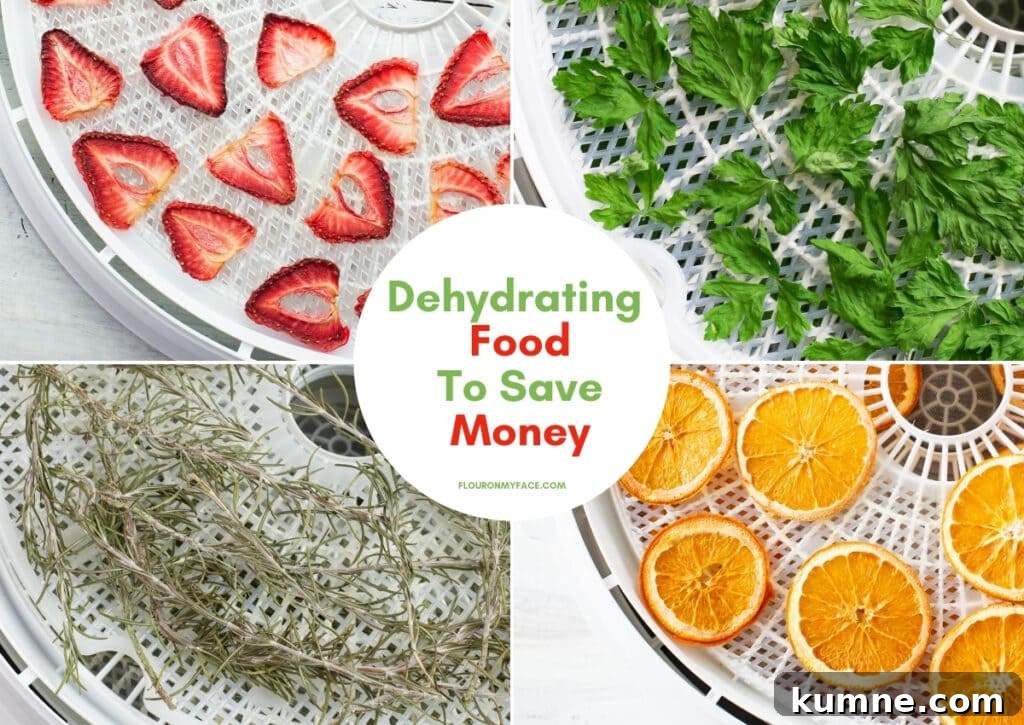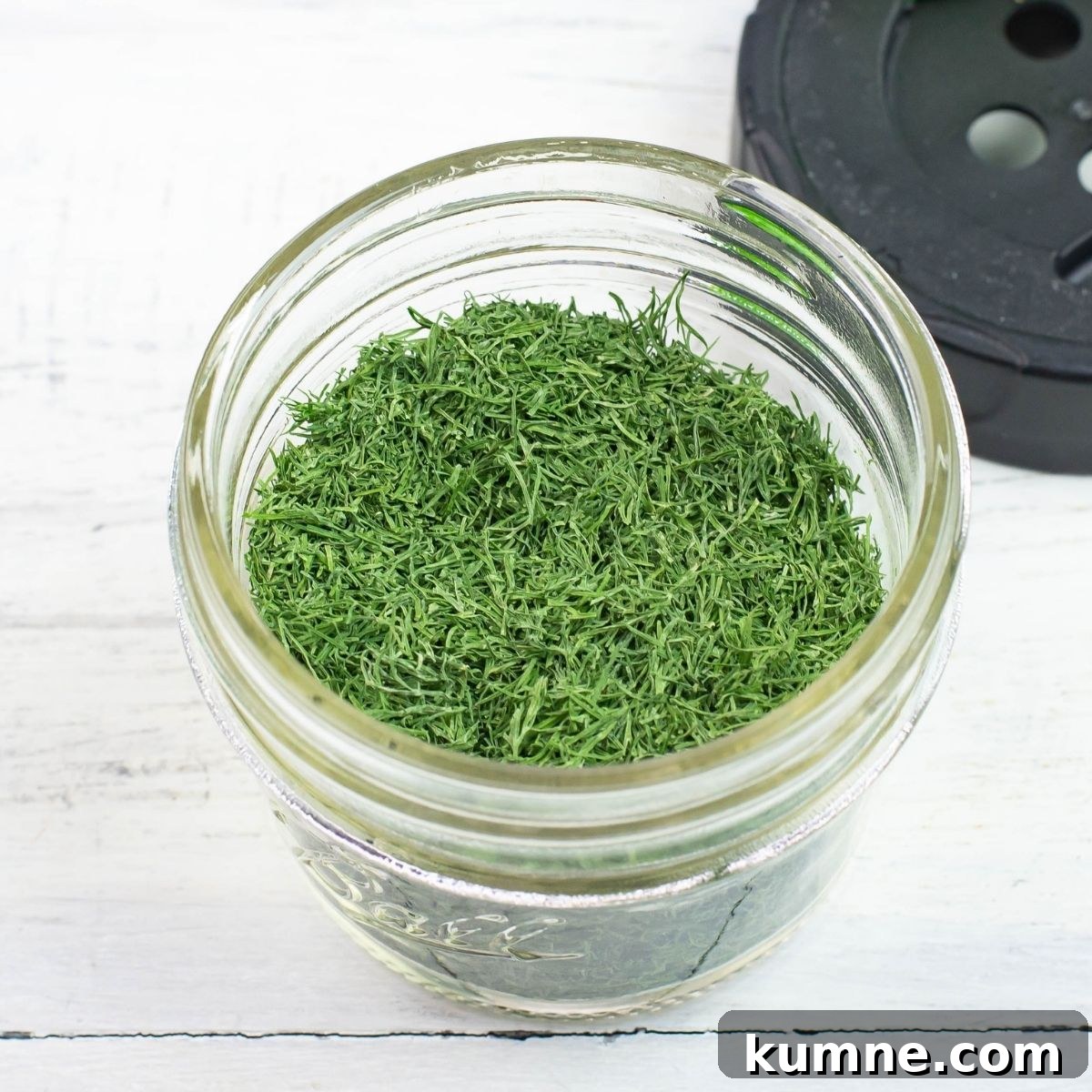
Preserving fresh dill by dehydrating is an easy, economical way to keep the herb you grew in your garden available year-round. Drying herbs is one of my favorite food dehydrator techniques for extending the harvest and saving money.
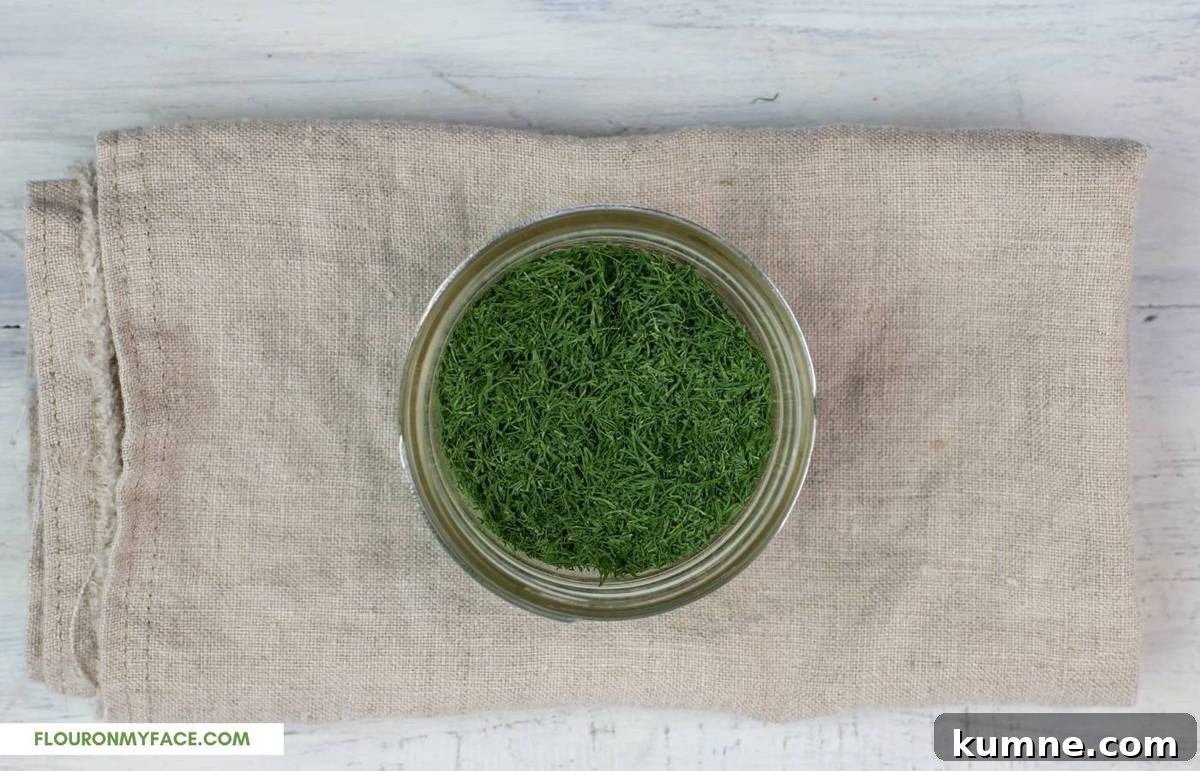
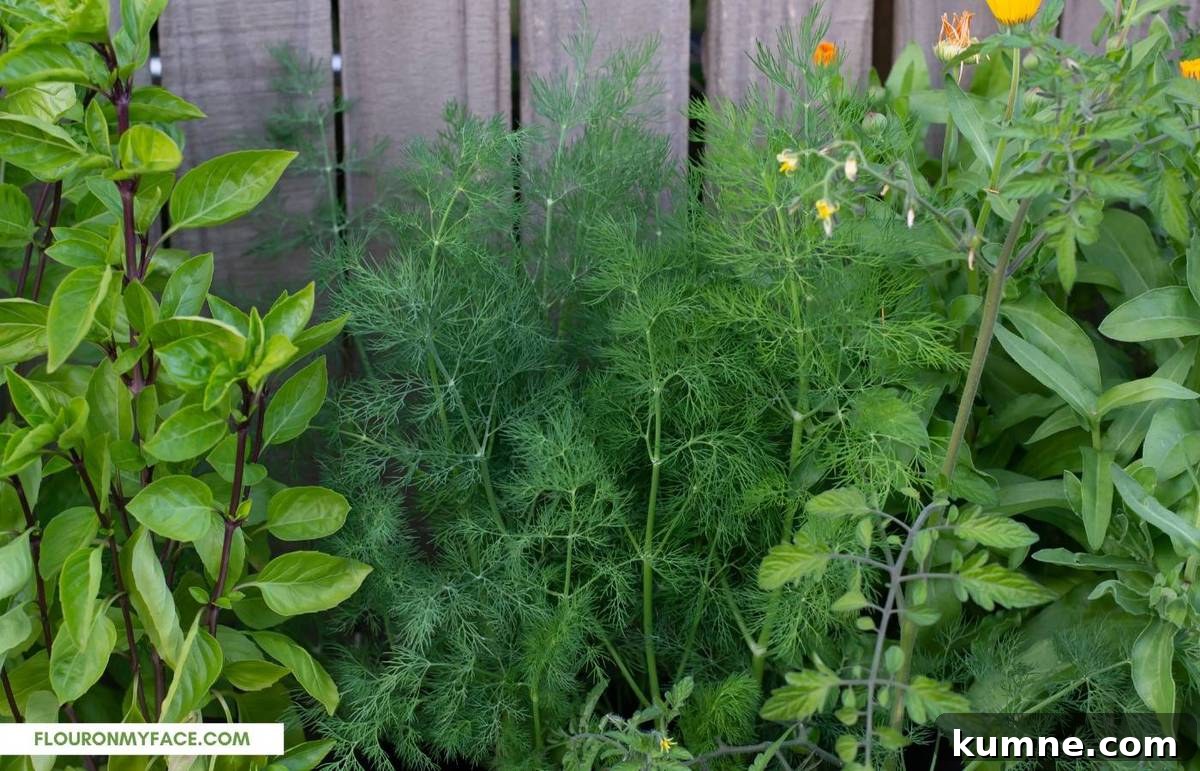
When summer arrives and your dill is flourishing, it’s tempting to use every sprig while it’s fresh. To make those flavors last through colder months, drying dill is one of the simplest and most reliable preservation methods.
Fresh-picked dill is wonderful in summer dishes, but drying it lets you enjoy that bright flavor in soups, sauces, dips and pickles during the off-season.
FREE Dehydrating Guide
If you’re new to dehydrating, download my free Dehydrating Quick Guide to learn the basics and get started with confidence.
How to dehydrate dill
Dehydrating dill is straightforward. You can air-dry, oven-dry or use a food dehydrator. I prefer a dehydrator because it dries herbs consistently and quickly, reducing the chance of mildew or uneven drying.
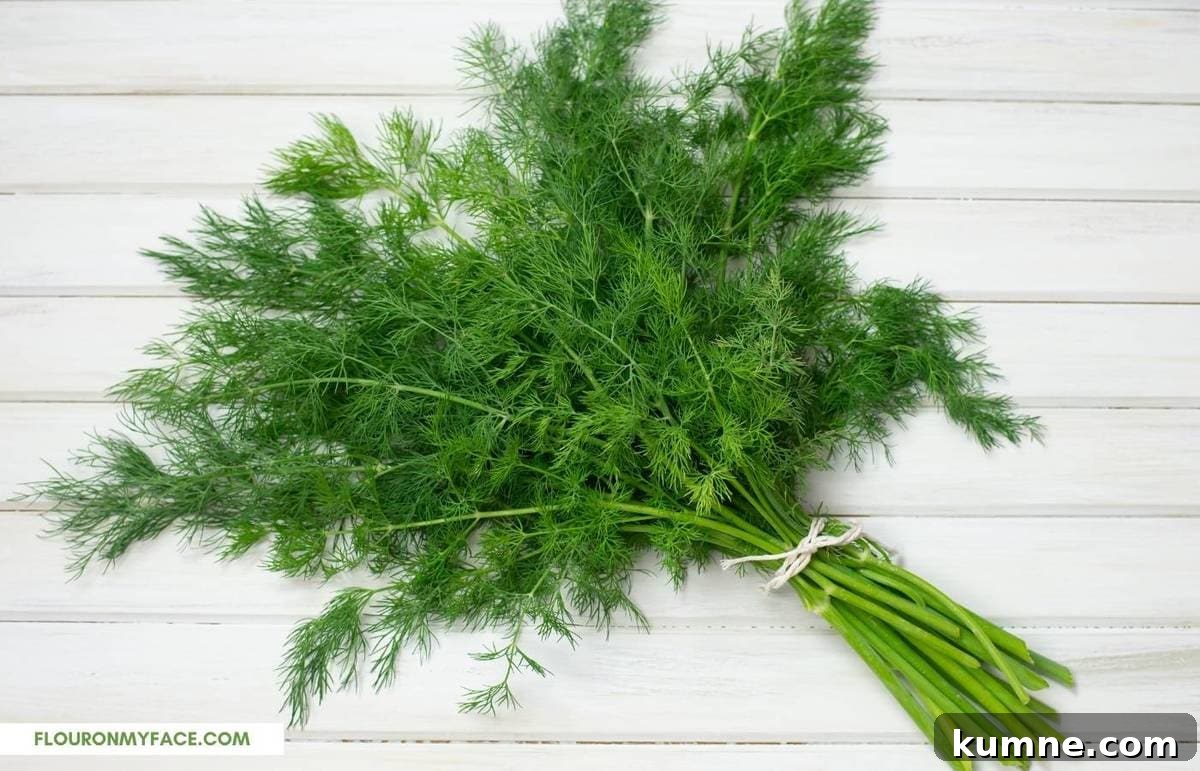
Step 1: Harvest in the morning after the dew has dried but before the heat of the day. Cooler temperatures help preserve the essential oils that deliver the best flavor.
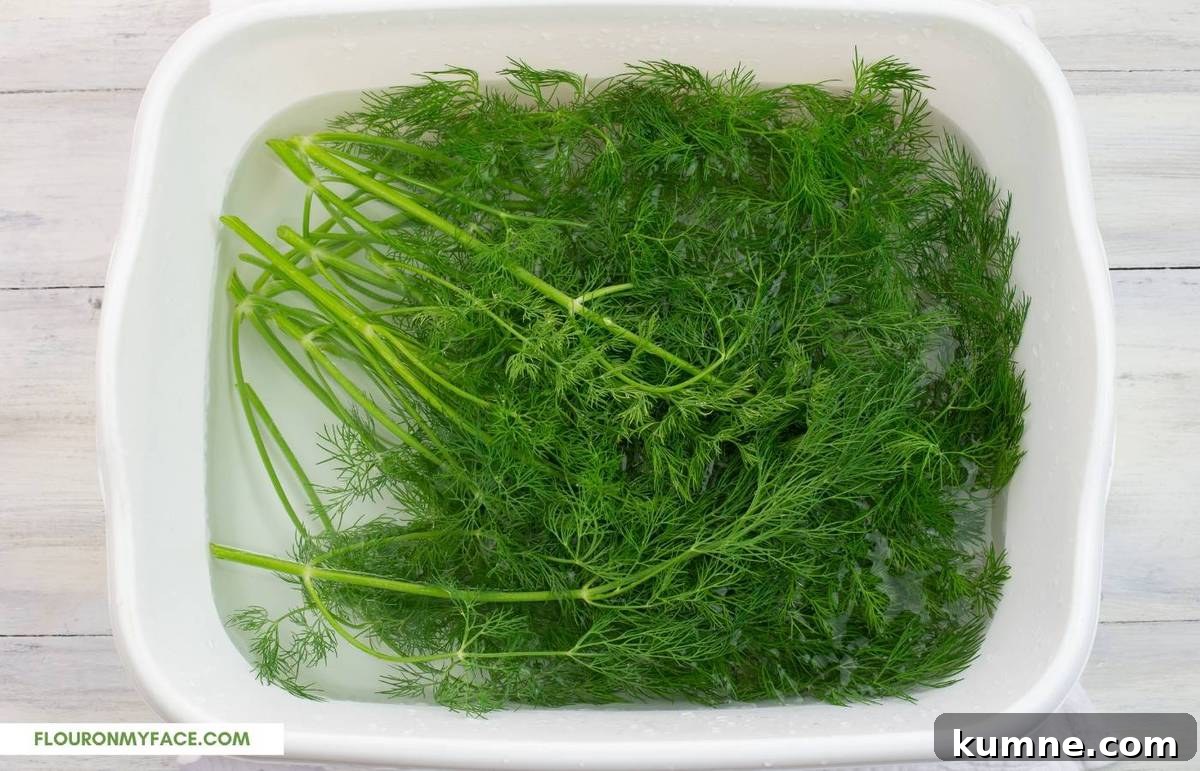
Step 2: Rinse the dill in a bucket of cool water to remove dirt and any small insects.
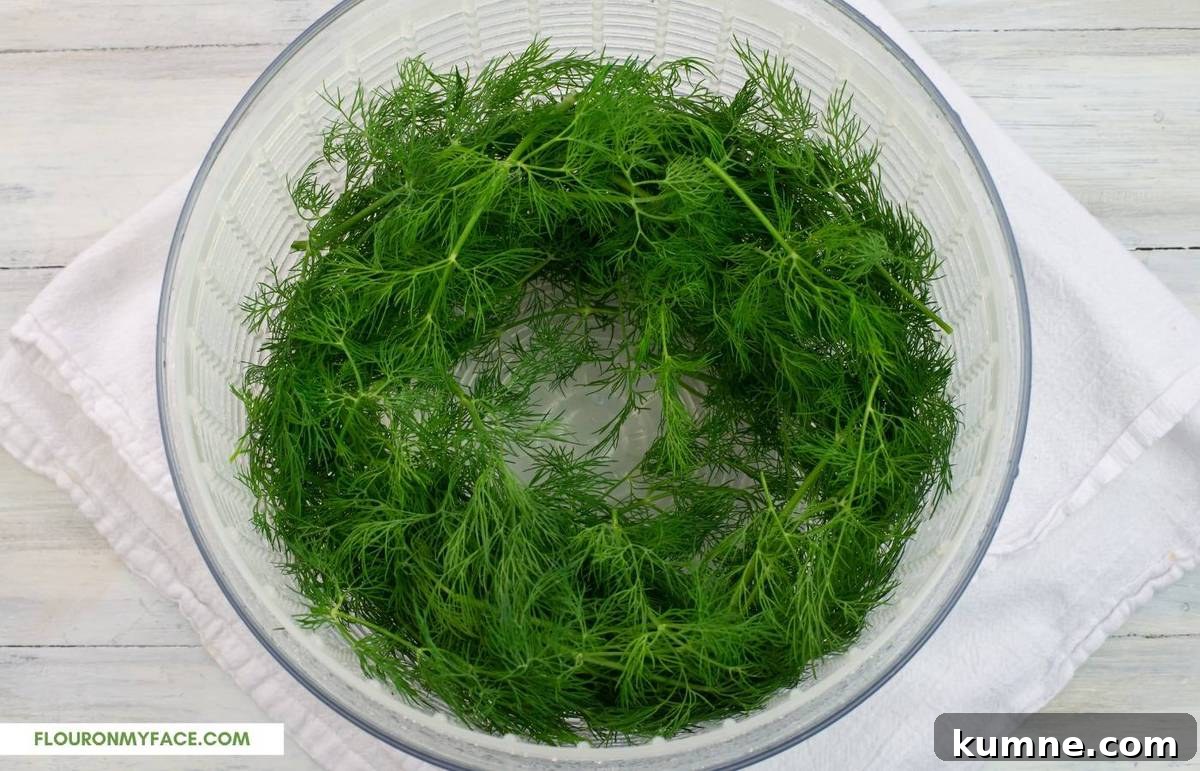
Step 3: Remove the thicker lower stem ends by pinching them off so only the tender tops remain.
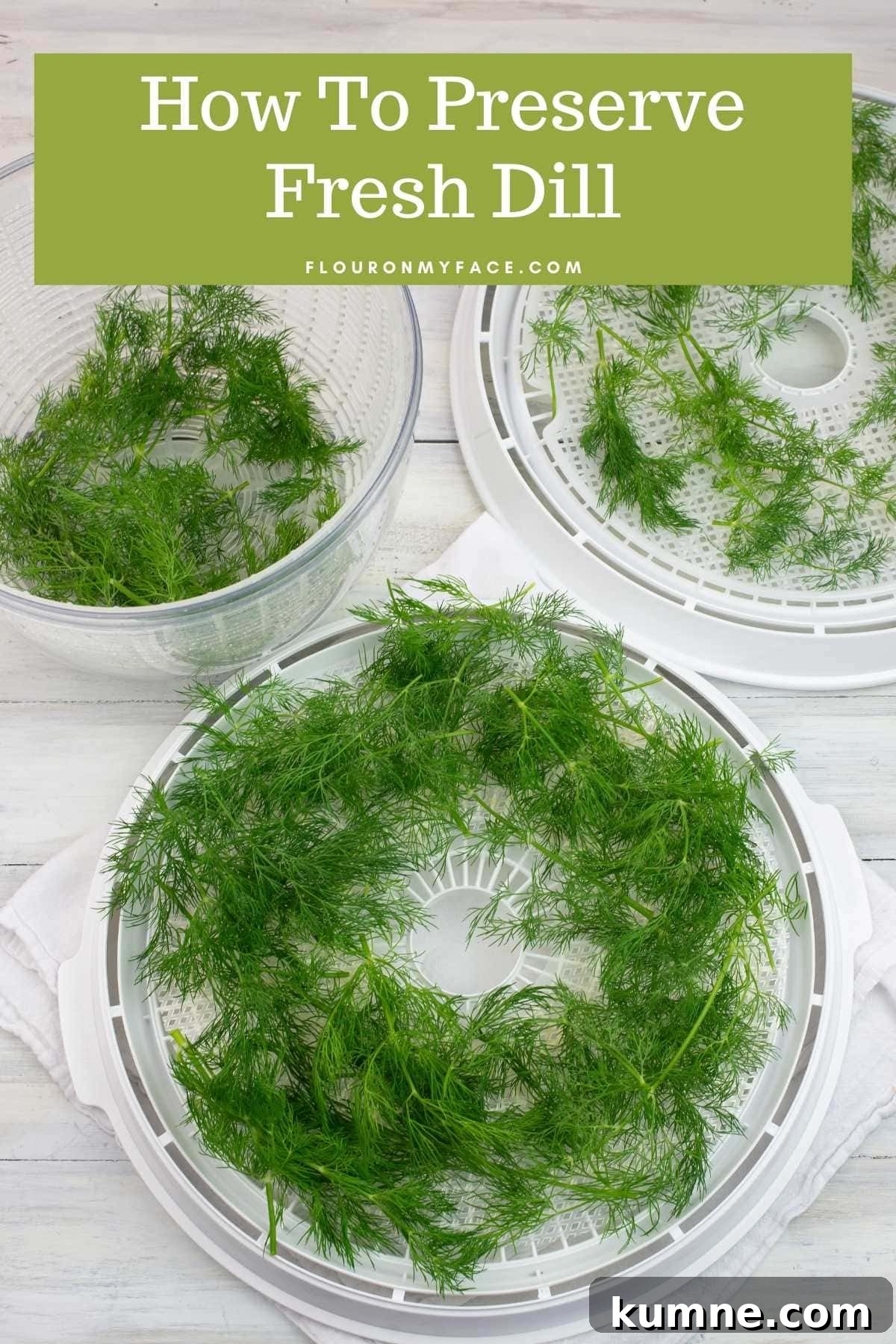
Step 4: Remove as much surface water as possible by patting the herb dry with a towel or using a salad spinner. Excess water increases drying time.
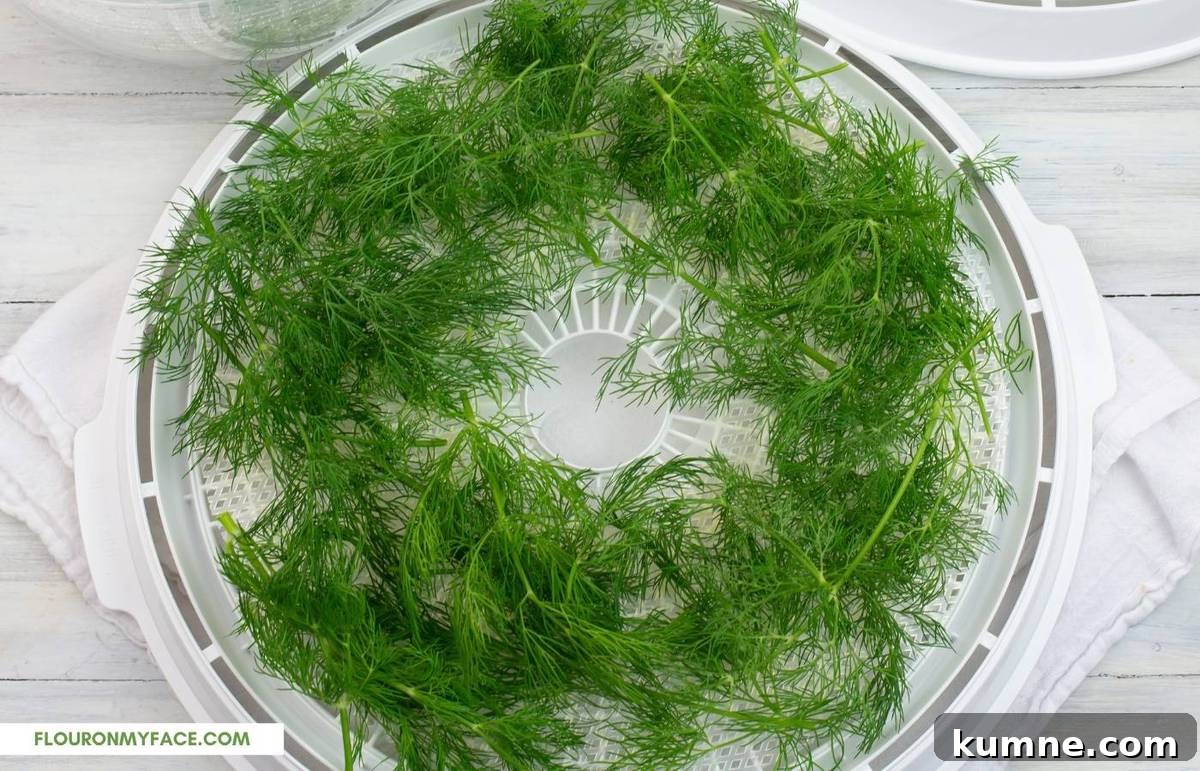
Step 5: Spread the dill on dehydrator trays. The feathery leaves allow hot air to circulate, so you can load trays a bit more densely than with some other herbs.
Step 6: Set the dehydrator temperature to about 95°F (35°C) if your unit allows temperature control. A low, steady temperature preserves flavor and color.
Step 7: Dry the dill for 10–14 hours. Times vary with humidity, how full the trays are and the exact temperature. Check periodically so the dill doesn’t over-dry.
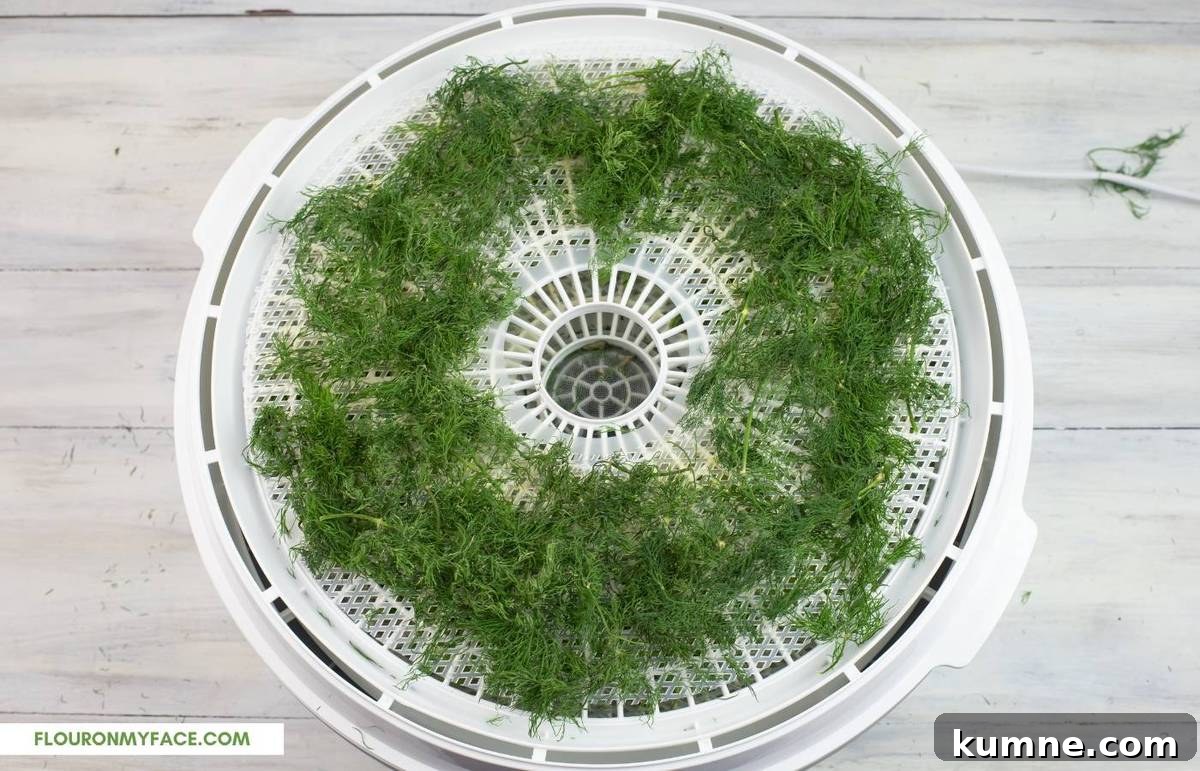
Step 8: When the dill is dry, transfer the stems to a bowl. The leaves will be dry but still slightly soft; try snapping a thicker stem—if it breaks and is brittle, the herb is ready.
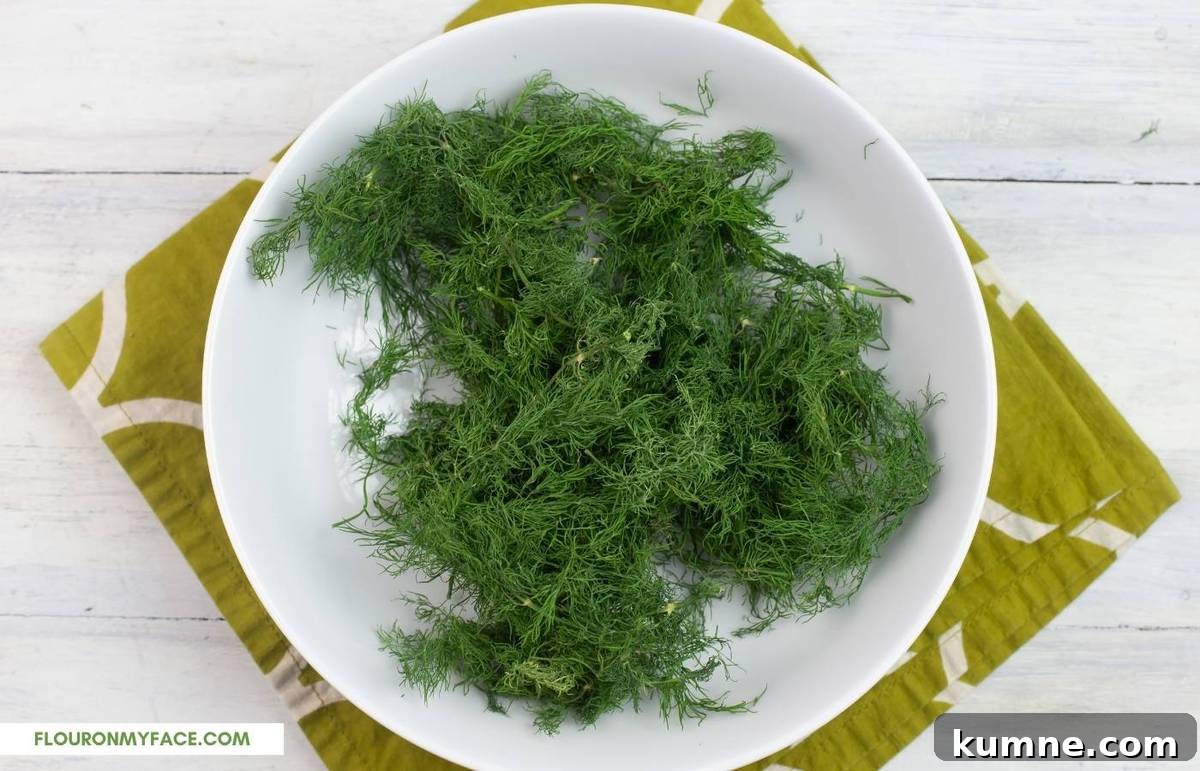
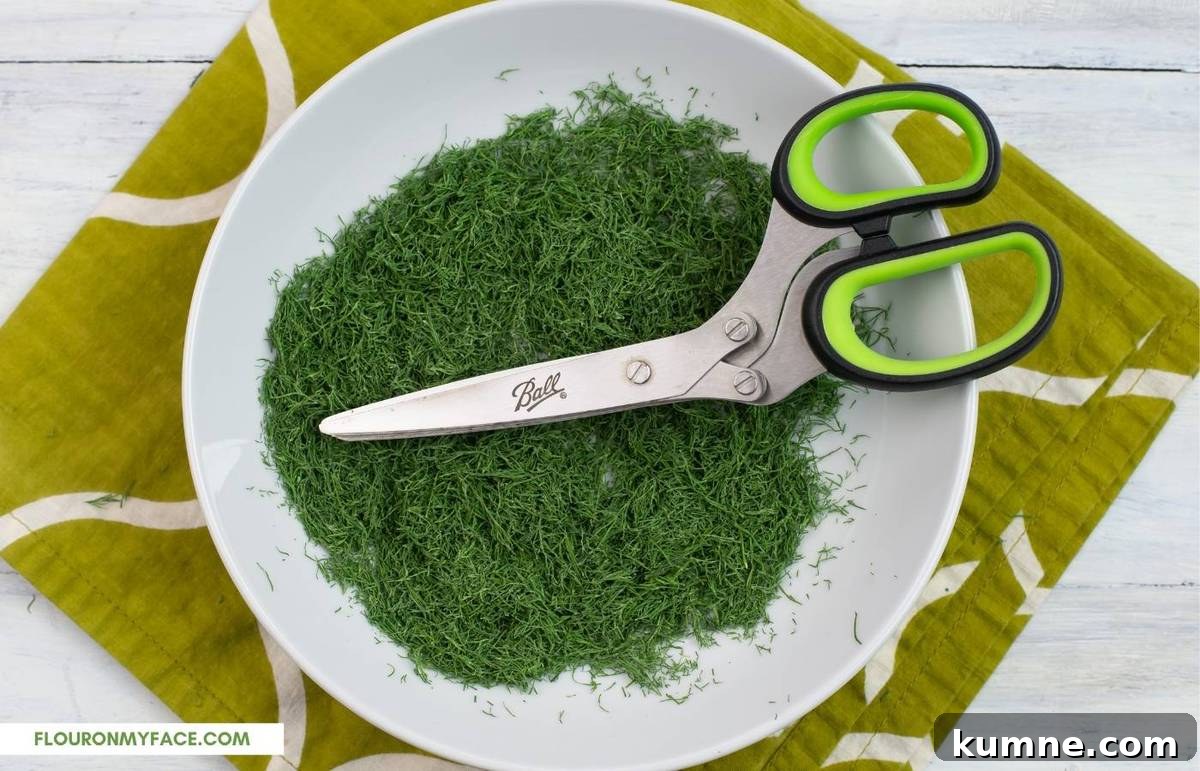
Step 9: Crush the dried dill with your hands or snip it with scissors to the size you prefer. Remove any woody stem pieces.
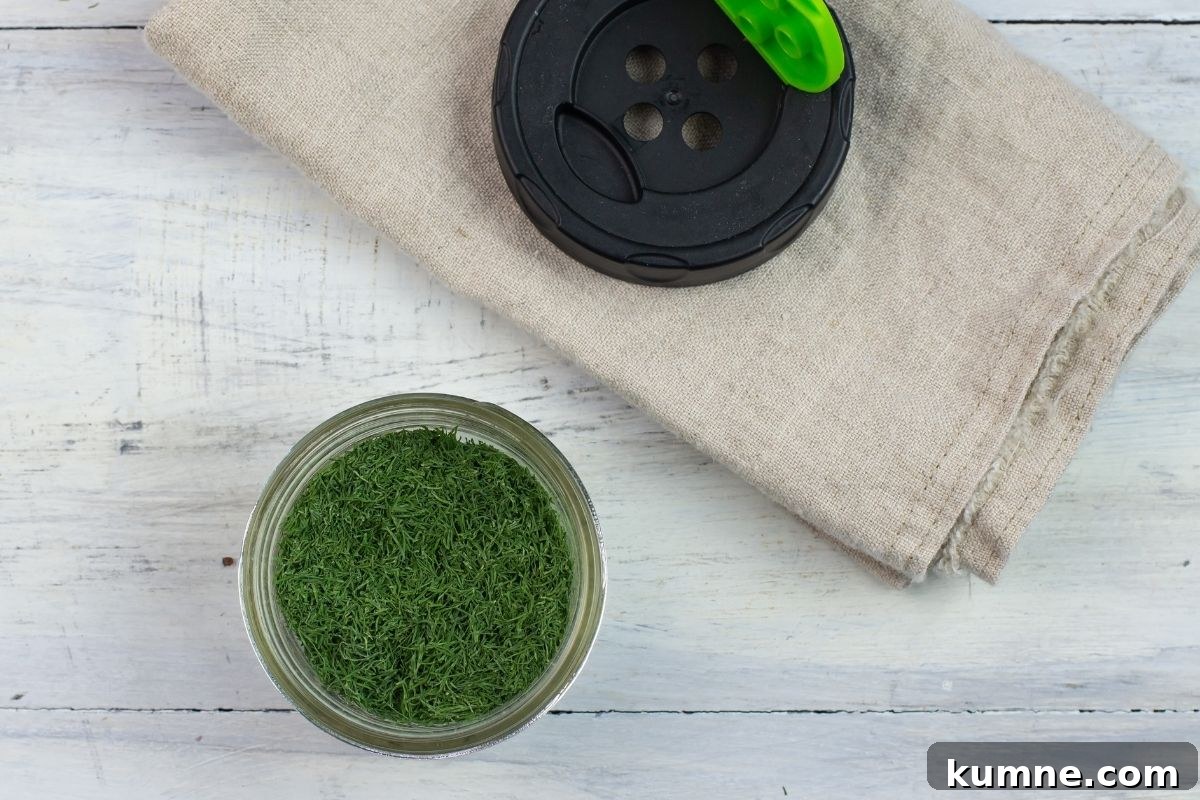
Step 10: Store the dried dill in an airtight jar in a cool, dark cabinet. Properly stored dried herbs keep longer and retain more flavor.
Use your dehydrated dill to flavor dishes like cucumber sandwiches, dips, sauces, salads and seafood throughout the year.
Recipe FAQs
Store dehydrated dill in an airtight container in a cool, dark place to preserve flavor and color.
Dried dill pairs well with fish and seafood and is great in dips, pasta salads, egg salads, sauces, meats and many vegetables.
Yes. Drying concentrates the flavor, so use roughly half the amount of dried dill when substituting for fresh.
Dehydrating Tips
- When to harvest: Pick herbs early in the morning after dew has evaporated but before midday heat reduces essential oils.
- Remove water: Use a salad spinner or pat the dill dry to speed drying and prevent clumping.
- Temperature: Dry tender herbs at about 95°F to best preserve oils and flavor.
- No temperature control: If your dehydrator runs hotter (some reach around 160°F), check herbs frequently—about every hour—so they don’t over-dry.
- Drying time: Expect variable times. Check often and test by snapping stems to confirm dryness.
More posts you’ll love!
- Cucumber Dill Dip
- How To Make Refrigerator Dill Pickles
- Printable Refrigerator Garlic Dill Pickles Canning Labels
- Pickles | How to Make Refrigerator Garlic Dill Pickles
- Food Dehydrator Recipes
Print, share or save the recipe below
Email questions or recipe requests to [email protected]. Follow on social platforms to see more recipes and tips.
How to Dehydrate Dill
Arlene Mobley – Flour On My Face
Equipment
-
Food Dehydrator
Ingredients
- 1 large bunch of fresh dill
- water (to fill a large plastic bowl or the sink)
Instructions
-
Pick the fresh dill early in the morning after the dew has dried but before the sun is high. Cooler harvests retain more essential oils.
-
Rinse the herb in cool water to remove dirt and bugs.
-
Pinch off thicker lower stems so only tender tops remain.
-
Lay dill on dehydrator trays, keeping enough space for air circulation.
-
Set the dehydrator to about 95°F (35°C) if possible. If your dehydrator has no temperature control, monitor frequently.
-
Dry for 10–14 hours, checking periodically. Timing varies with load and humidity.
-
Transfer dried stems to a bowl. Test dryness by snapping a thick stem; it should be brittle.
-
Crush or snip the dried dill to the desired size and remove any remaining stems.
-
Store in an airtight jar in a cool, dark cabinet.
-
Yield: about a 4-ounce jar of dried dill, depending on how much you start with.
Recipe Expert Tips
- Harvest timing: Morning harvest after dew dries gives the best flavor.
- Remove excess water: A salad spinner speeds up drying by removing surface moisture.
- Low temperature: Drying at 95°F preserves essential oils and color.
- High-temp dehydrators: If your unit runs hot, check herbs frequently to avoid over-drying.
- Drying time: Times vary—check often and test stems for brittleness.
- Yield: The amount dried depends on the starting volume; the example here produced about a 4-ounce jar.
Nutrition
More dehydrating recipes you’ll love!
Explore additional food dehydrator recipes to preserve fruits, vegetables and herbs so you can enjoy garden flavors all year.