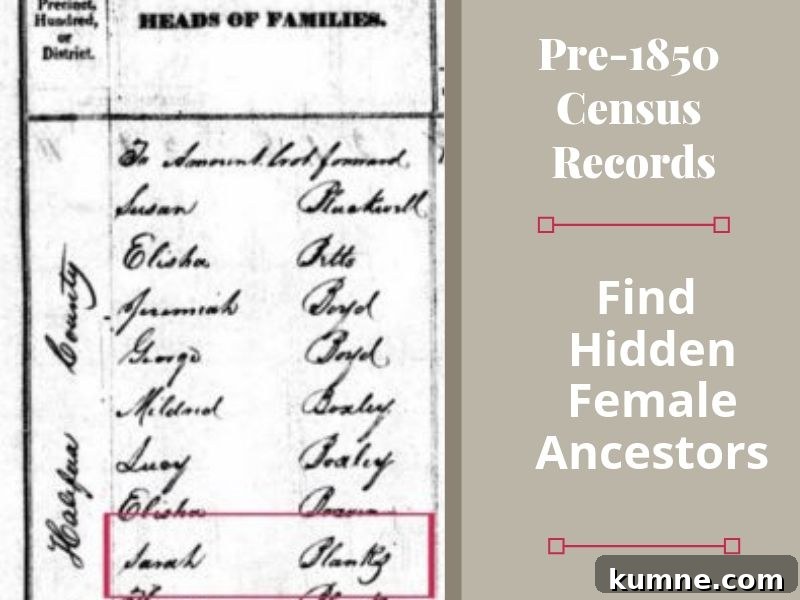
Genealogy researchers often struggle to identify female ancestors in pre-1850 U.S. census records. Those early censuses list individuals in age and sex categories rather than by name (except for the head of household), so women frequently appear only as ticks in columns. If you rely on surface-level reading of these records, it’s easy to overlook the female members of a household.
I used to dread the moment my family tree reached the pre-1850 censuses. Over time I realized that the dread came from not understanding how those records were created and what they actually tell us. The key is to learn how the data were collected and to analyze the records before jumping into conclusions.
A simple principle helps: understand what the record is actually saying. Census records were compiled for taxation and representation, not specifically for genealogy. To use them well, look beyond the marks and numbers and interpret what they imply about individuals’ ages, relationships, and locations.
How Can We Use These Pre-1850 Census Records To Find Female Ancestors?
PLACE FEMALE ANCESTORS IN TIME AND LOCATION
In many early censuses, female household members appear only as counts in age categories. For example, in the 1830 Wake County, NC census, a household may show one female in the 30–39 column. By assuming the household head is the eldest male in the same age range, you can reasonably infer the 30–39 female is his wife and estimate her birth range by subtracting the age range from the census year.
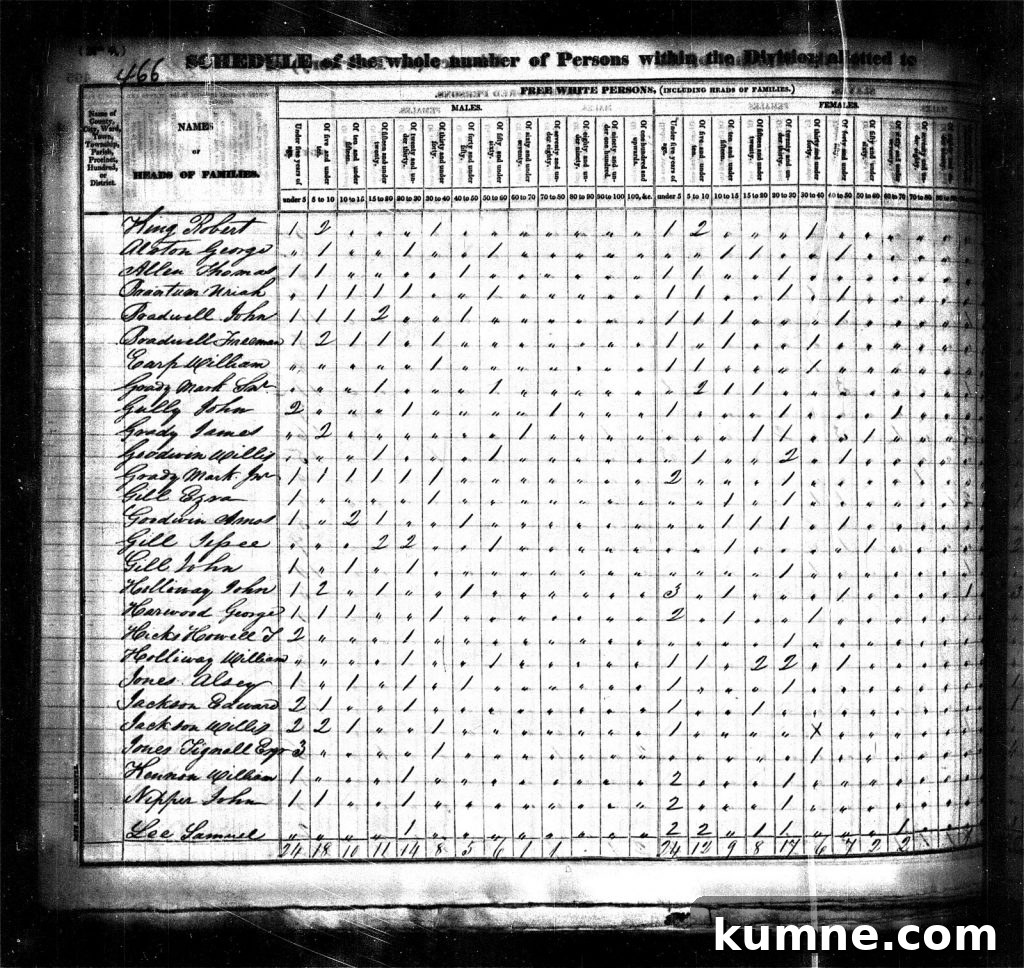
For instance, a woman in the 30–39 column in 1830 was likely born between 1791 and 1800. The census alone won’t give a name, but it places her in a county at a time and provides a useful birth-range estimate to guide searches for vital, probate, or church records.
A FEMALE AS HEAD OF HOUSEHOLD
Women do appear as heads of household in pre-1850 censuses, most often because they were widows. When a woman is listed as head, that status is a strong clue about her circumstances and opens specific research paths.
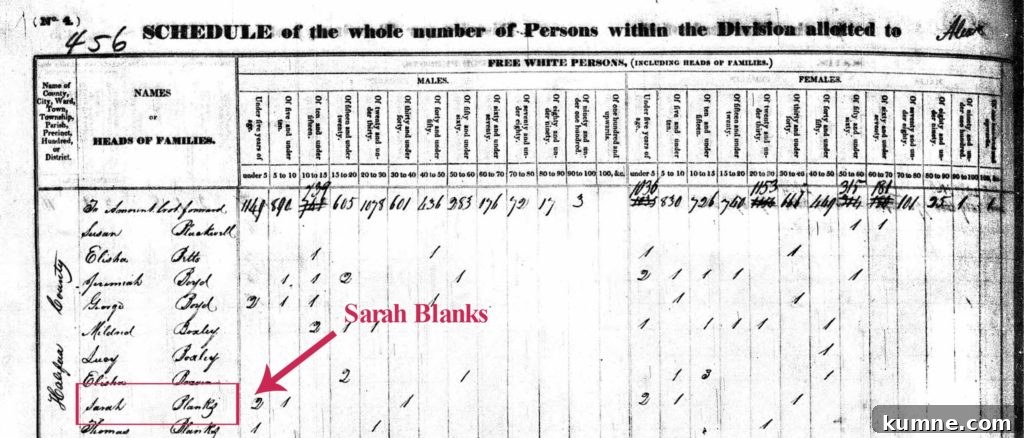
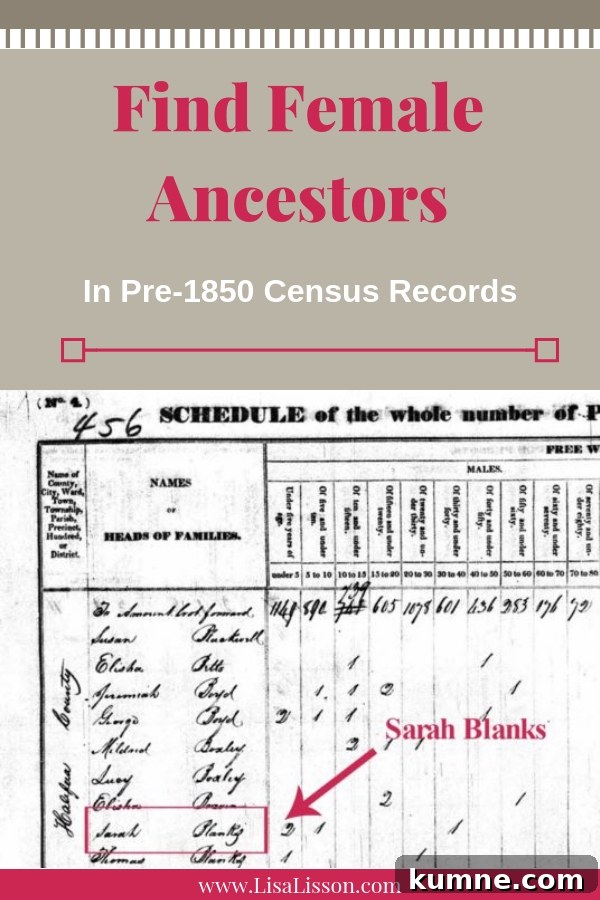
Take Sarah Blanks in Halifax County, VA, listed as head of household in 1830. Her household entries—children of various ages and one female age 30–39—give an estimated birth range of about 1790–1800 for Sarah. From these clues, researchers pursued marriage and probate records and found an 1818 marriage to Thomas Blanks and a probate record showing Thomas died in 1820, leaving Sarah a widow. That sequence fits the census evidence and confirms the conclusion suggested by the head-of-household notation.
When the census is not alphabetized, pay attention to neighboring households; neighbors and associates can provide important clues about family connections, land boundaries, and migration patterns.
Who was the 30–39 white male in Sarah’s household? A man of that age listed in her household is not her husband if she is enumerated as head. Continued research identified him as Langley Talbot, whose connection to Sarah was unconventional; such discoveries often require following probate, court, or local records beyond the census itself.
DISCOVERING A SUBSEQUENT MARRIAGE
Early census comparisons can reveal changes in households that indicate remarriage, death, or blended families. For example, James Harward of Wake County, NC, appears in multiple early censuses with different female age categories across decades. By tracking how many and which age groups appear with him in 1790, 1800, and 1830, you can infer whether the household contains the same wife, a younger second wife, or other relatives, and then seek marriage, death, and probate records accordingly.
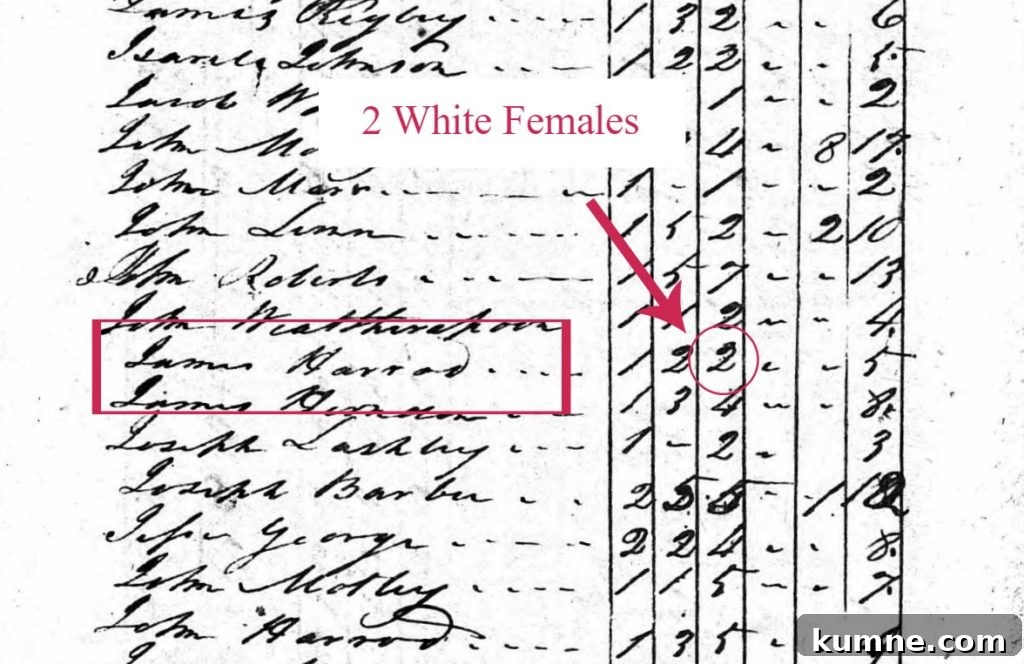
In 1790 James appears with two white females and two males under 16; by 1800 his household shows a white female aged 26–44 (likely his wife Rosannah Barbee), and by 1830 he is age 60–69 with an oldest female aged 40–49, indicating a younger woman likely not the same wife listed in 1800. These patterns suggest a second marriage and prompt targeted searches for marriage and death records in the county where the family remained.
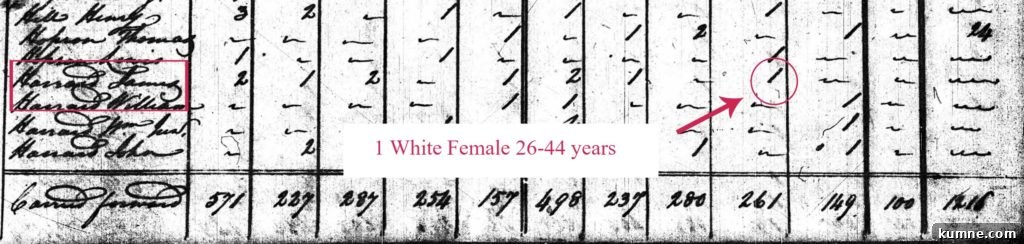
From these changing age categories you can: 1) search for early marriage records, 2) check probate for potential fathers or husbands, 3) search for a second marriage when a new younger woman appears, and 4) pursue death or probate records for an earlier wife.
Remember….
Pre-1850 census records rarely provide names for every household member, but they are far from useless. Those tick marks and age columns place women in a specific county and decade and provide narrow birth-date ranges. Used in combination with marriage, probate, land, church, and local records, early censuses supply critical clues that help identify elusive female ancestors and support broader genealogical conclusions.
Other posts of interest:
- Finding Children Between the Census Years
- How To Make Genealogy Sense of Census Records
- What Is That Family Cemetery REALLY Telling You?
***Please note that the original post referenced affiliate links and policies. This version omits external links and focuses on presenting research guidance based on the census examples discussed above.