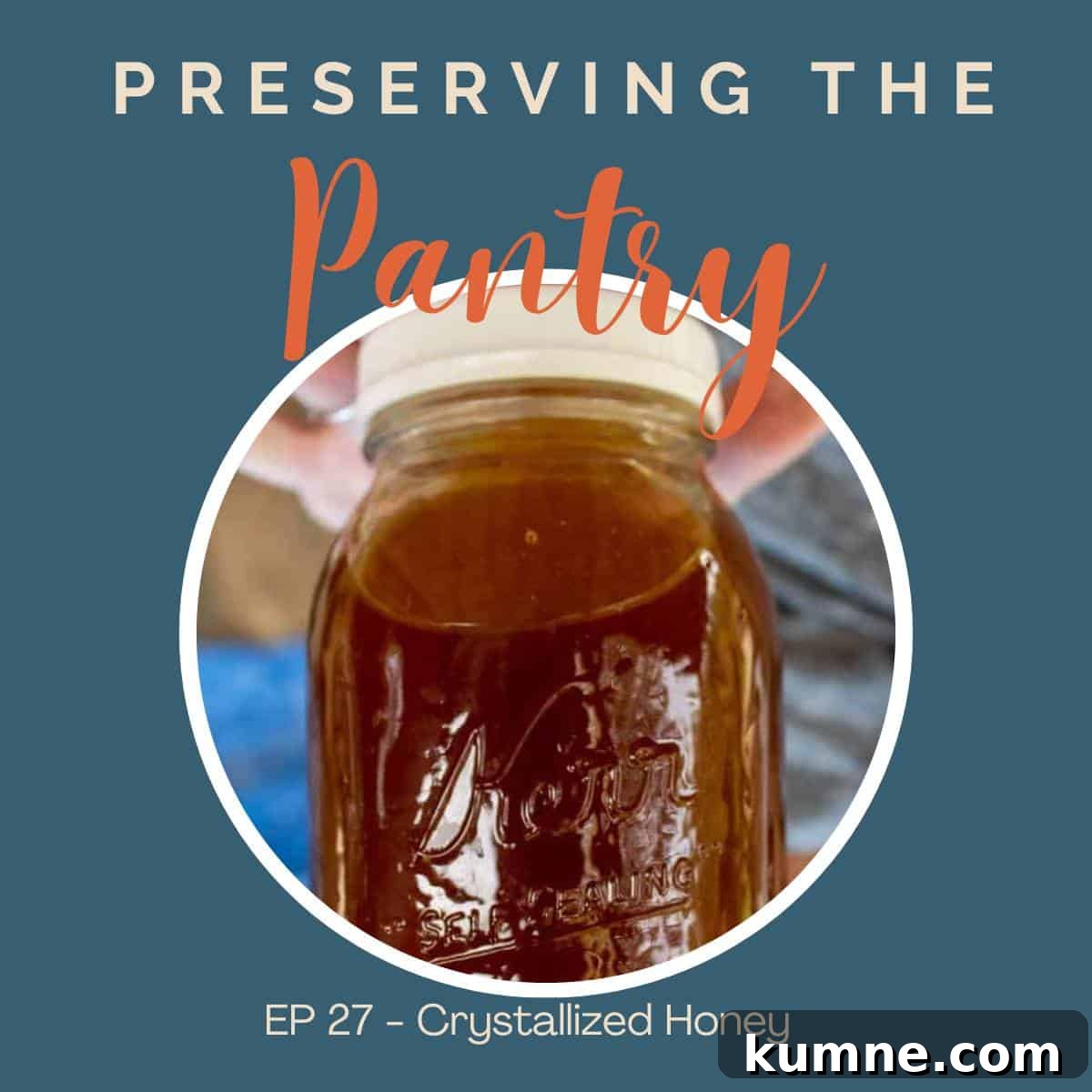
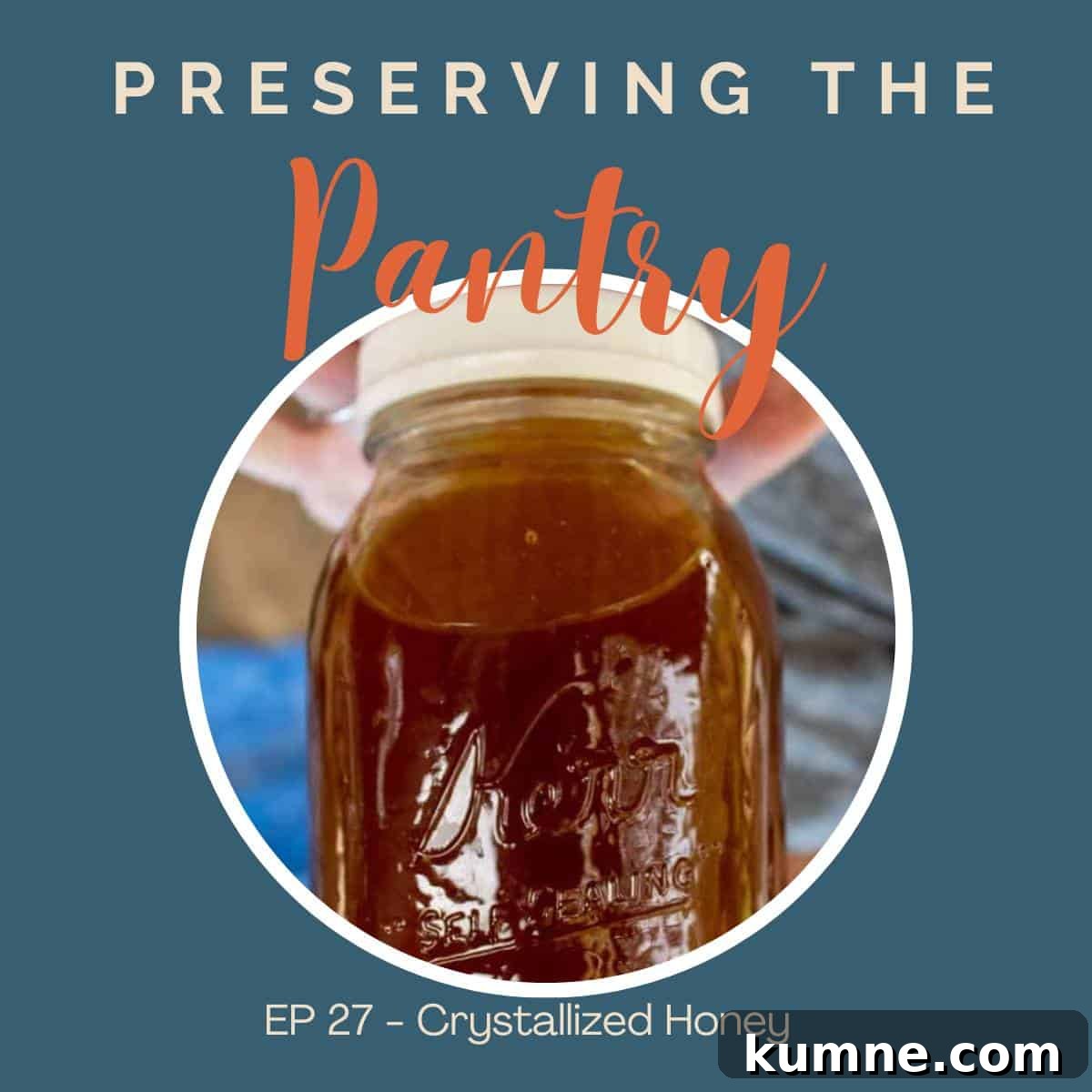
In episode 27, Kathy explains why honey crystallizes and how to handle crystallized honey so you can continue to enjoy it.
Play the episode
Crystallized Honey
Articles about honey bees and honey
- Harvesting honey
- Honey bees
In this episode you’ll learn:
- Why honey crystallizes
- The difference between raw honey and store-bought honey
- Best temperature to store honey
- Whether crystallized honey is bad
- How to remove crystals from honey
- How long raw honey lasts
Where to listen to the podcast
Listen to this episode on iTunes, Spotify, Amazon Podcast, or your favorite podcast player. Or scroll down to read the full transcript.
If you love this podcast, I’d love to hear about it! Leave a comment below and hop over and leave a comment on Instagram @preservingthepantry!
Transcript
Hi, and welcome back to Preserving the Pantry. Today I want to talk about honey.
We keep several hives and, when the season cooperates, I harvest honey. A strong hive can yield several gallons in a good year. I give much of it away, but I still store several gallons in my pantry, usually in quart-sized canning jars with lids.
Over time, honey naturally begins to crystallize. You’ll notice small sugar crystals forming, the texture thickens, and the honey may look a bit cloudy. This is normal for raw honey and doesn’t mean it’s spoiled. The flavor and the beneficial properties remain, only the texture changes. Crystallized honey is fine to use on oatmeal, in tea, or in baking.
Crystallization happens because honey is a supersaturated sugar solution—more than 70% sugar with very little water. Raw honey retains pollen, enzymes and other components that encourage crystallization, whereas many store-bought honeys are pasteurized and heavily filtered, which reduces or delays crystallization but also removes some of the raw honey’s benefits.
One of the remarkable qualities of honey is its shelf life. Properly stored honey can last essentially indefinitely. Its very low moisture content and acidic pH—typically between 3 and 4.5—create an environment where bacteria and most microbes cannot grow. However, if honey is left in an open container in a high-humidity environment, it can absorb moisture and become more susceptible to fermentation or spoilage. That’s why small open honey crocks or unsealed containers are best used up quickly, especially in humid climates.
All raw honey will crystallize eventually. How quickly this happens depends on the nectar source, the honey’s composition, and storage temperature. Honey crystallizes most readily between about 55°F and 65°F. I store my jars in a cool place near that range and often see crystals form. If you want to slow crystallization, storing honey closer to 70°F can help.
If your honey has crystallized, it’s still safe and usable—don’t throw it out. If you prefer a smooth texture, you can gently re-liquefy a small portion. I recommend heating only one to two cups at a time, because repeatedly heating large amounts can degrade flavor and beneficial compounds. Scoop the amount you want into a clean jar, seal it to keep moisture out, and place the jar in warm water. Either set the jar in a bowl of hot tap water that reaches just above the honey level, or place it in a pot of water kept at a low, steady temperature—around 100°F to 108°F—using a gentle simmer. Monitor the water and remove it from heat if it gets too hot. The gentle warmth gradually dissolves the sugar crystals and restores a smooth consistency. Note this is a temporary fix: crystallization can recur over time.
Avoid microwaving honey, as microwaves heat unevenly and can quickly reach temperatures that damage the honey’s beneficial enzymes and flavor.
Raw honey offers many qualities you’ll want to preserve: its flavor, enzymes, and nutrients. Heating gently and minimally will help maintain those benefits while returning the honey to a preferred texture.
Remember: crystallized honey is not spoiled. Store honey in sealed containers in a stable, moderate temperature, and you can enjoy it for a very long time.
Thanks for listening, and be sure to tune in again next week for more episodes of Preserving the Pantry. See you next week in the pantry!