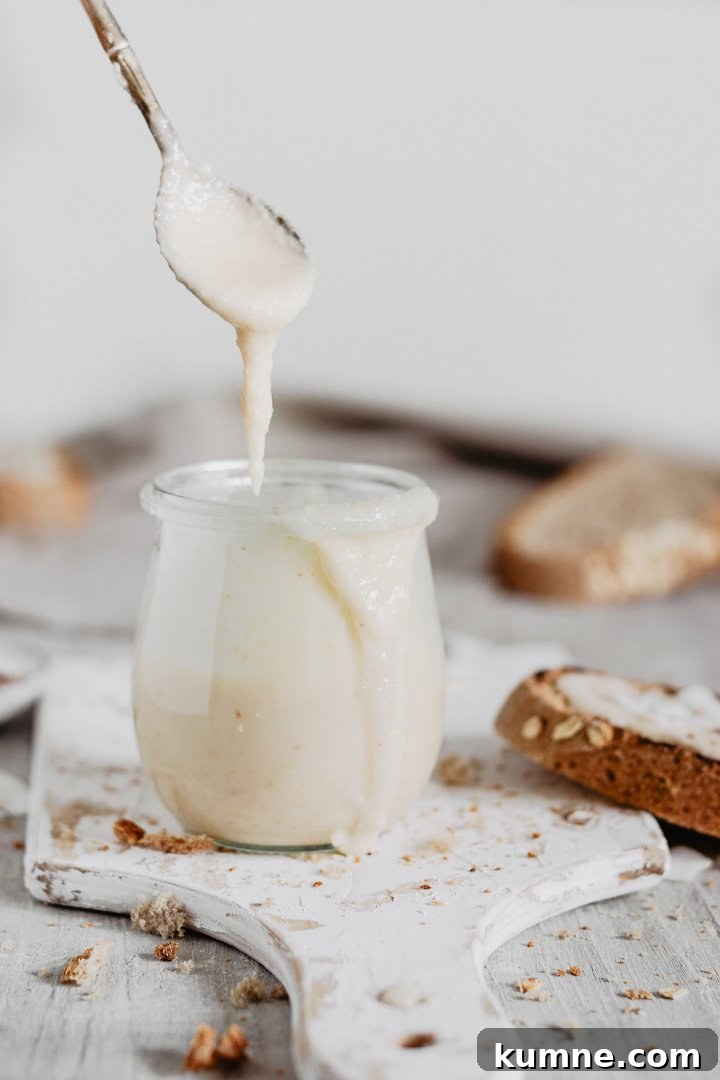
In this post I’ll share everything you need to make homemade coconut butter.
One of my favorite parts of food blogging is sharing the little tricks and lessons I learn through experiments and mistakes. While some keep their methods secret, I believe sharing helps everyone improve. If someone shares a tip with me I feel grateful, and I’m happy to pass along what I’ve learned in return.
What’s your approach? Tell me! For now, let’s focus on homemade coconut butter…
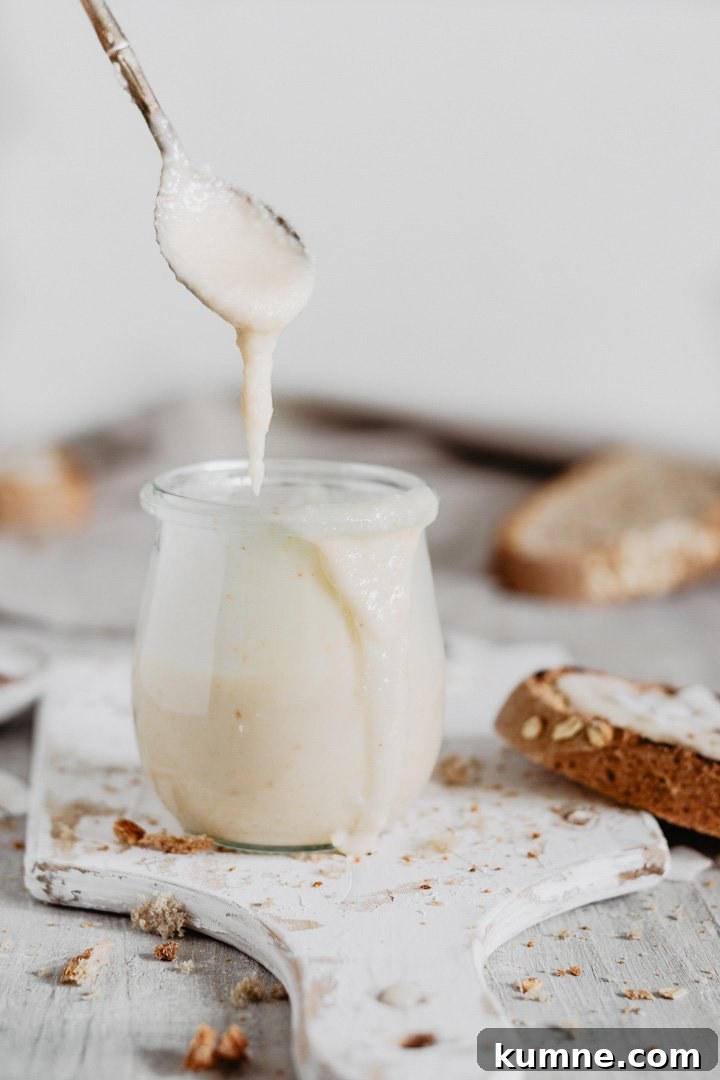
Coconut butter, like other nut butters, is made by grinding dehydrated coconut flesh into a spreadable paste.
What’s the difference between coconut butter and coconut oil?
I used to use the terms interchangeably until recently. They are different, but easy to understand:
- Coconut butter is made by blending dehydrated coconut flesh (desiccated coconut) until it becomes a creamy, spreadable paste—similar to peanut, almond, or hazelnut butter. Think of it like the olive paste before oil is extracted: the whole fruit remains, with fiber and nutrients intact.
- Coconut oil is the fat extracted from coconut flesh and is typically used as a cooking fat or butter substitute in baking. It solidifies around 24–25°C. Like olive oil, it’s the separated oil from the original paste.
That’s it—simple and useful to know.
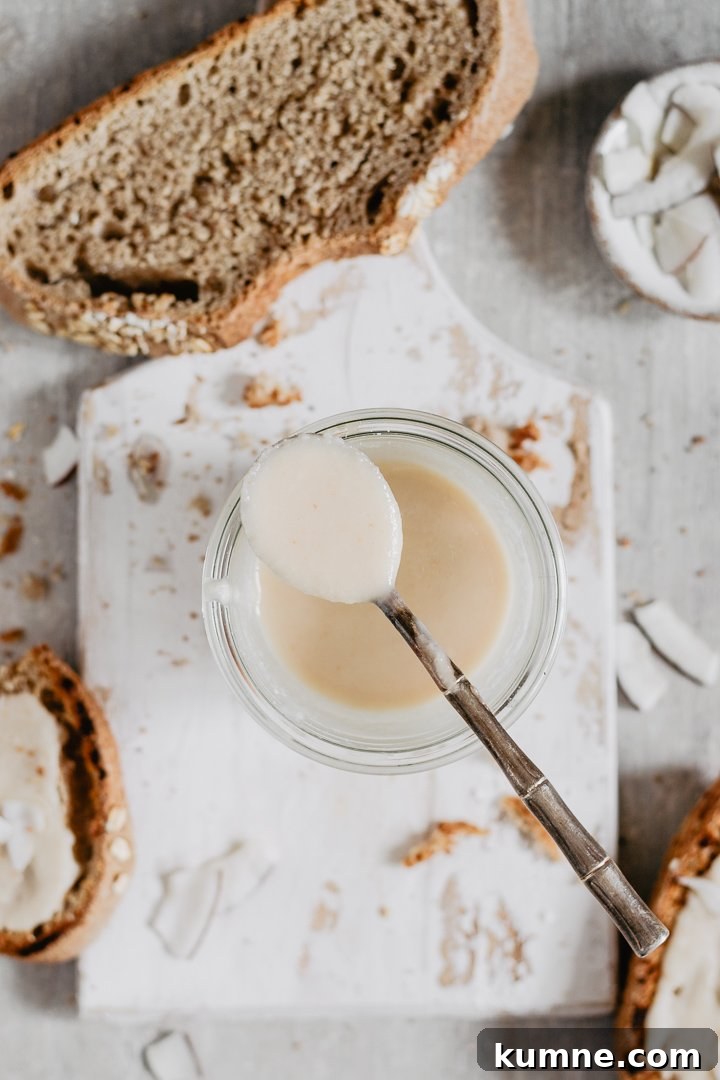
Spreadable coconut butter retains the fiber and nutrients of the coconut meat.
Homemade coconut butter: my best tips
If you read my post on making nut butters at home, you’ll know I had to experiment a lot before getting a smooth, stable result. The same trial-and-error approach applies to 100% coconut butter—I’m sharing the mistakes I made and how to avoid them so you can get perfect coconut butter at home.
Top 3 tips
Tip #1: Lightly toast the coconut
Toasting the desiccated coconut for a few minutes helps it grind more evenly and develop a richer aroma. Don’t skip this step—toast briefly and keep stirring to avoid burning.
Tip #2: Use a small blender or mini food processor
You rarely need large quantities, so a compact blender or mini food processor works best. A smaller container keeps the coconut closer to the blades and improves emulsification.
Tip #3: Alternate speeds
Start at medium speed so the coconut grinds evenly, then move to high speed to loosen oils and create a smooth texture. If the coconut sticks to the sides, stop and push it back toward the blades with a spatula, then continue. Work in short bursts to avoid overheating the motor.
Extra trick
Every 5 minutes, pause and let the blender rest for a few minutes before resuming. In about 10–15 minutes total you should have a silky, lump-free coconut butter.
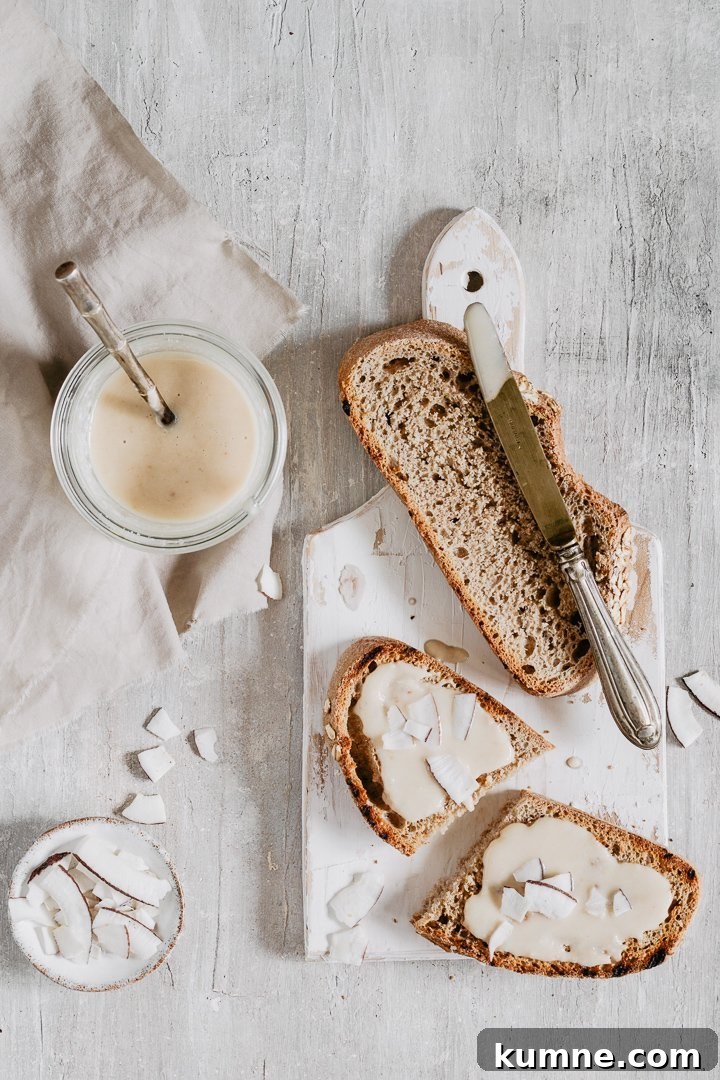
Coconut butter is delicious spread on toasted bread.
How can you use it?
Coconut butter is versatile. Try these ideas:
- Add a spoon to coffee or bulletproof-style drinks for a creamy texture.
- Use it as a topping for porridge, pancakes, or waffles.
- Spread it on toast or crackers as a dairy-free alternative.
- Incorporate it into raw or no-bake treats and fudges for richness and body.
- Use it in baking where coconut flavor and fats are desirable.
- Or enjoy it by the spoonful—though keep portions in mind because it’s calorie-dense.
If you try this recipe or adapt it, tag me on Instagram or send a photo to [email protected]
NOTE: This post contains affiliate links. If you purchase through those links I may earn a small commission at no extra cost to you. Thank you for the support!
BURRO 100% COCCO
Print
Pin
Ingredienti
- 200 gr Desiccated coconut (coconut râpé)
Instructions
-
Toast the coconut in a wide pan for about 4–5 minutes, stirring constantly to avoid burning.
-
Use a mini blender or small food processor to grind the toasted desiccated coconut until it releases its oils.
-
Alternate between medium and high speeds and pause occasionally to prevent the motor from overheating.
-
If coconut sticks to the sides, stop the blender and push it back toward the blades with a spatula, then continue.
-
Total processing time should be about 10 minutes to reach a smooth, spreadable texture.
-
If the blender overheats, stop and let it rest for approximately 5 minutes before resuming.
-
Store the coconut butter in an airtight glass jar at room temperature.
In colder months it may solidify—just warm it briefly to soften.