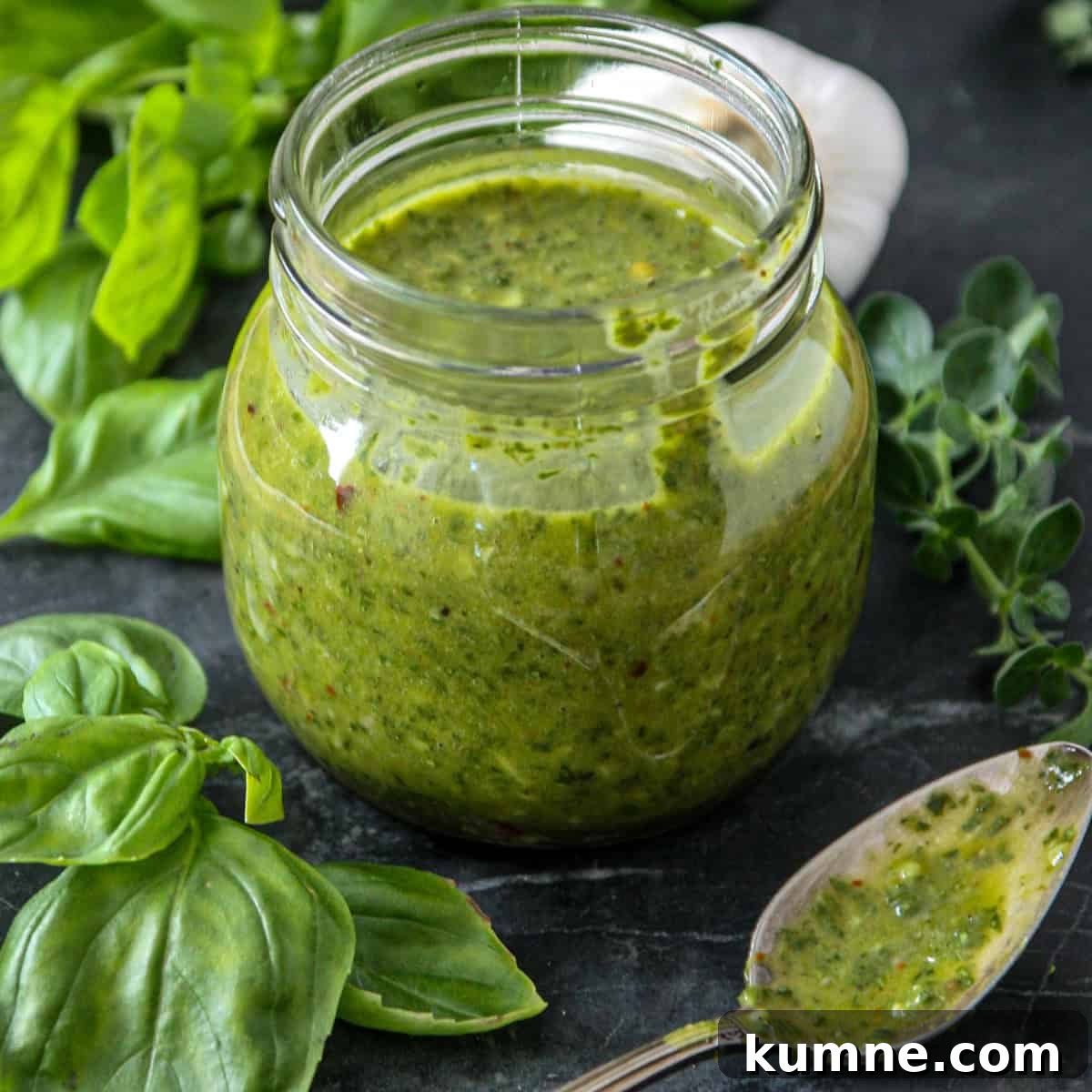
This basil chimichurri is bright, tangy, and full of herb flavor — a fresh twist on the classic Argentine parsley sauce. Made with fresh basil and oregano, garlic, lemon, red wine vinegar, and extra virgin olive oil, this no-cook condiment comes together in minutes and pairs beautifully with grilled meats, seafood, and vegetables.
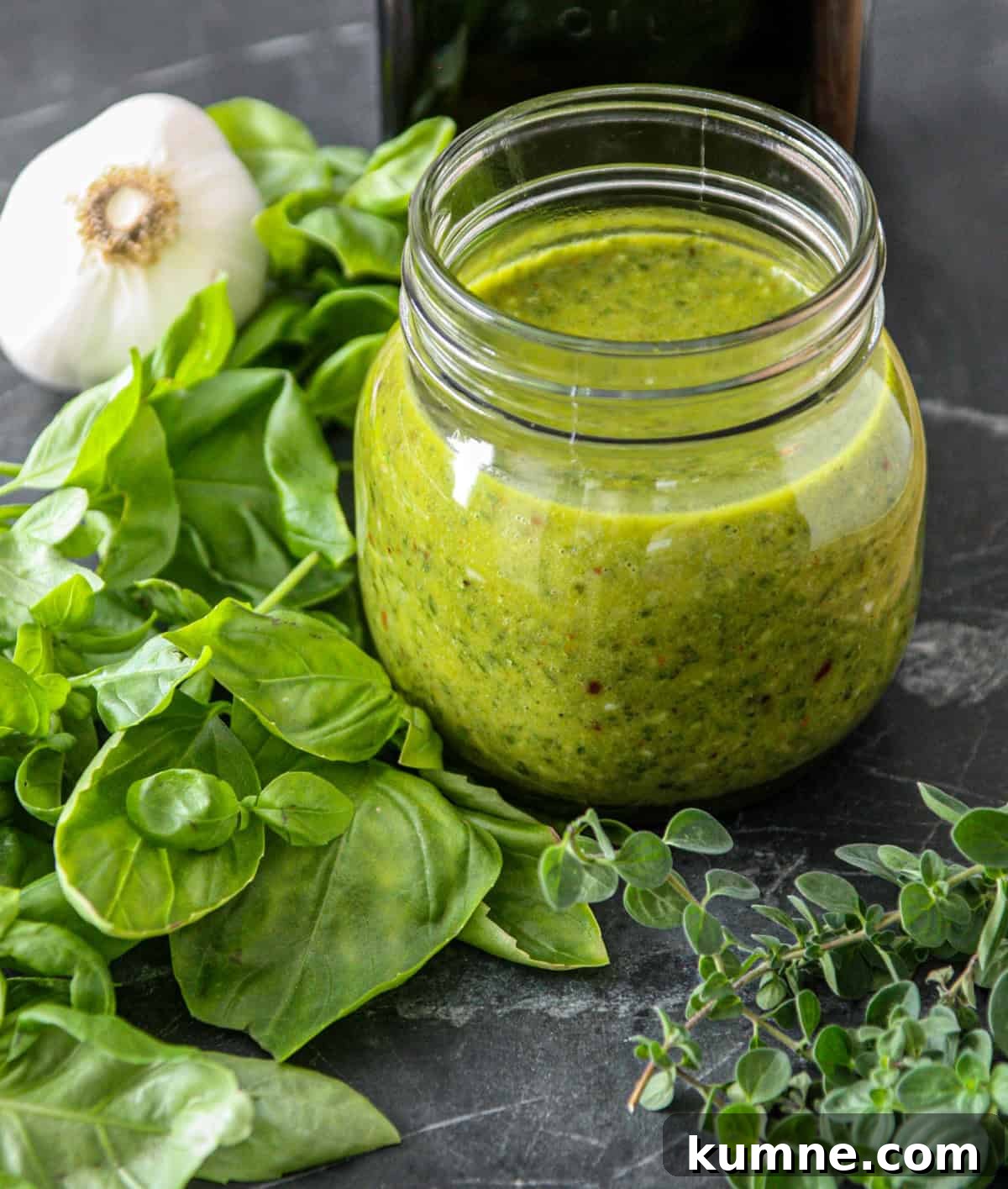
Chimichurri is an uncooked herb sauce that originated in Argentina and Uruguay, traditionally served with steak and other grilled beef. While classic chimichurri highlights parsley, this version swaps in basil for a sweeter, aromatic profile. Like using different herbs in pesto, chimichurri adapts well to whatever fresh herbs you have on hand.
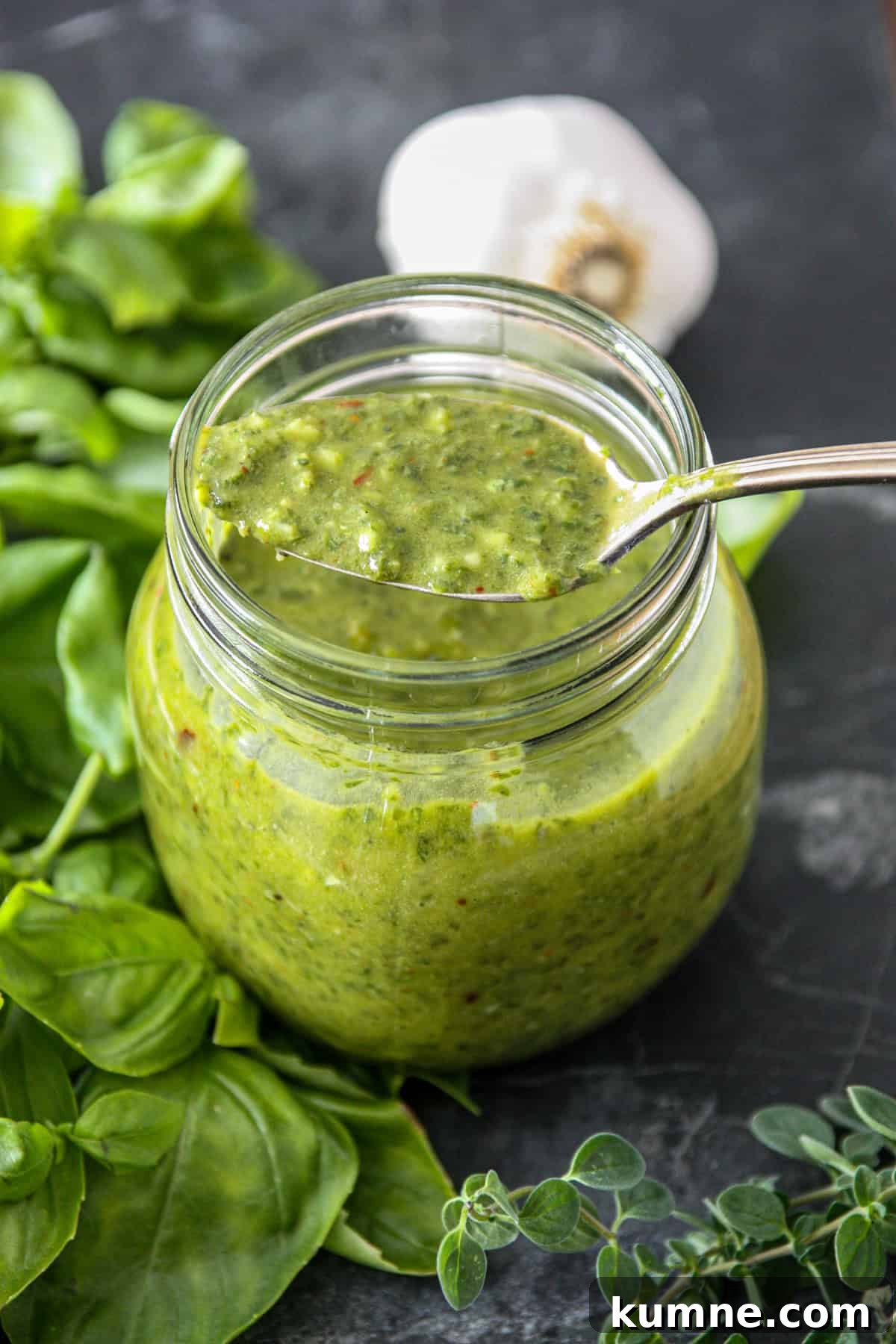
What’s the difference between pesto and chimichurri?
Both sauces are green and uncooked, but they serve different purposes. Pesto is typically richer and creamier, often made with basil, pine nuts, and Parmesan, and commonly used as a pasta sauce. Chimichurri contains no nuts or cheese, relies on vinegar and citrus for acidity, and has a lighter, tangy flavor that complements grilled meats and vegetables.
Why you’ll love this recipe
- Fast and easy. Ready in about five minutes with no cooking required.
- Versatile. Excellent on flank steak, pork tenderloin, chicken, fish, shrimp, and roasted vegetables.
- Fresh and vibrant. Showcases garden-fresh basil and oregano with bright lemon and vinegar.
- Diet-friendly. Gluten-free, dairy-free, and vegan.
Ingredient notes
- Basil: Use fresh basil leaves for the best flavor. Genovese or sweet basil work well; avoid Thai basil for this recipe because its licorice notes can overpower the sauce.
- Oregano: Fresh oregano is ideal. If using dried, substitute about 2 teaspoons.
- Olive oil: Choose a good quality extra virgin olive oil for flavor and mouthfeel.
- Red wine vinegar: Traditional for chimichurri, though white wine vinegar, white balsamic, or apple cider vinegar can be used in a pinch.
- Lemon juice: Freshly squeezed lemon brightens the sauce.
- Garlic: Fresh cloves are best; jarred pre-minced garlic can be used if needed.
- Red pepper flakes: A small amount adds a subtle heat. Increase to taste.
- Salt and pepper: Kosher salt and freshly ground black pepper to taste.
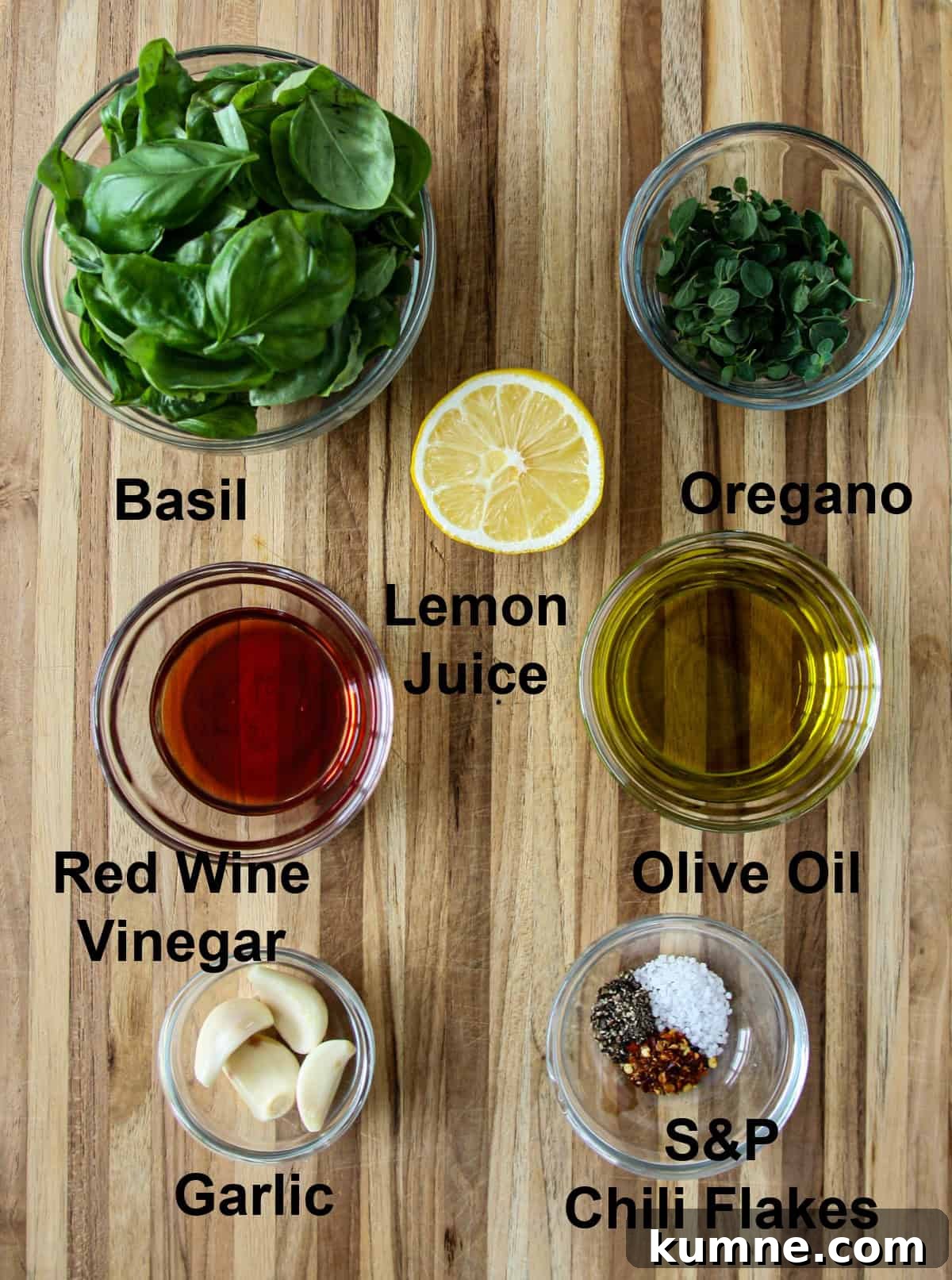
How to make it, step by step
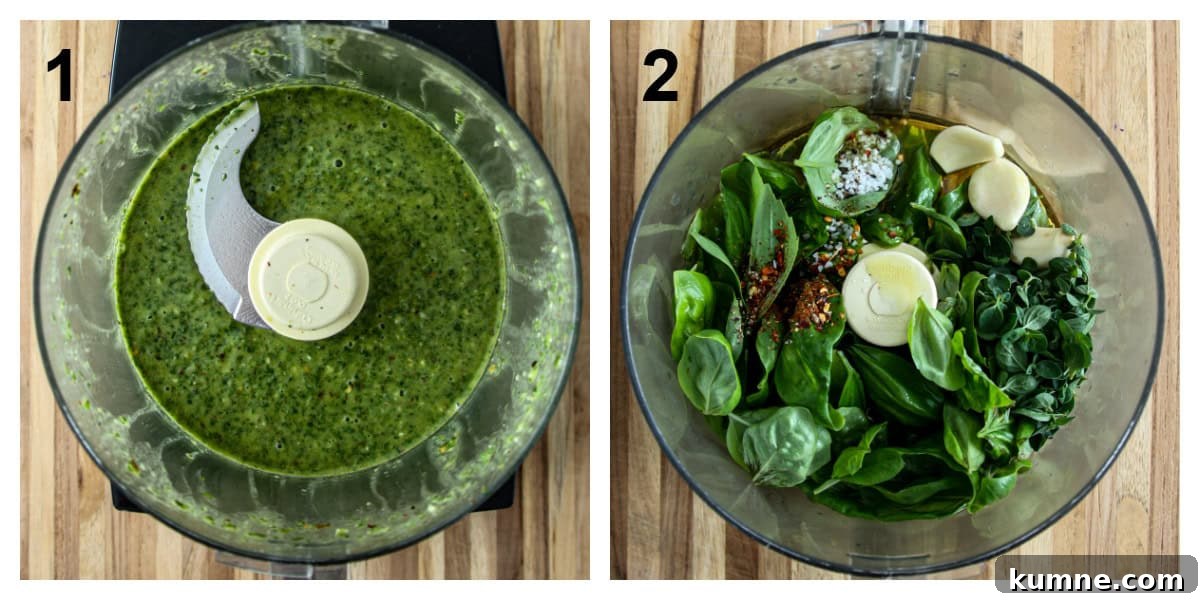
- Place all ingredients in the bowl of a food processor or a blender.
- Pulse until the herbs are finely chopped and the oil is emulsified to your preferred consistency. Scrape down the sides as needed.
Variations
Swap or combine herbs freely. Cilantro and parsley is a great pairing for Mexican- or Thai-inspired dishes; use lime instead of lemon for a brighter citrus note. For more heat, add extra red pepper flakes or a fresh jalapeño. A teaspoon of smoked paprika adds a smoky dimension. If you prefer a chunkier texture, finely dice red onion or shallot and stir it in by hand rather than processing it.
Pro Tips
- Selecting basil: Choose bright, unblemished leaves that smell aromatic. Avoid wilted or browned leaves.
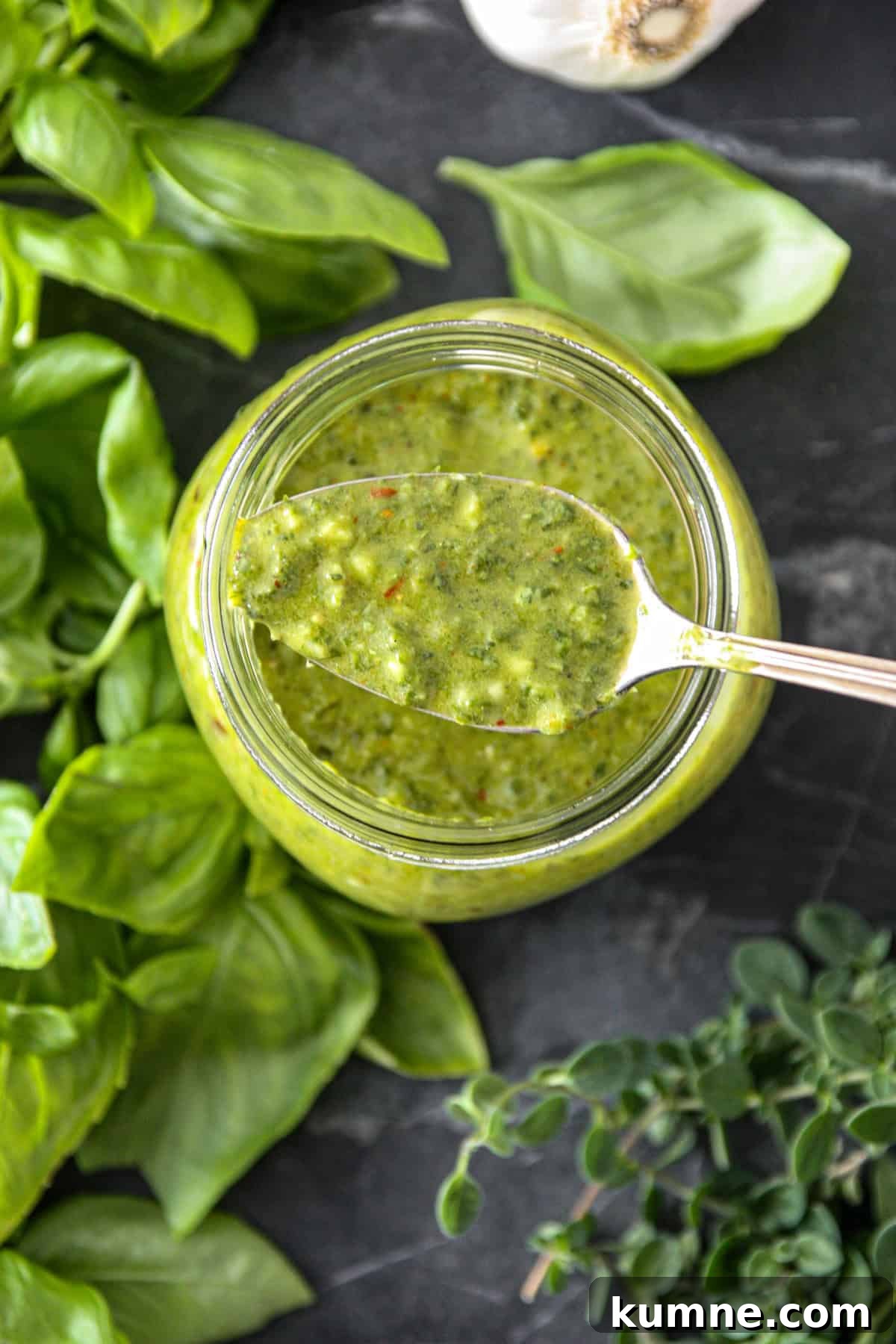
- Consistency: Pulse until you reach the texture you like — from slightly chunky to nearly smooth. Chop by hand or use a mortar and pestle for a more rustic salsa-like finish.
- Seasoning: Taste after the first pulse and adjust salt, pepper, and chili flakes to suit your palate.
- Make ahead: Store in an airtight container in the fridge for up to four days. Olive oil may solidify slightly; bring to room temperature before serving.
- Freezing: Freeze in ice cube trays, then transfer cubes to a resealable bag for up to three months. Texture and bright freshness will diminish, but frozen chimichurri is useful for cooking.
Serving suggestions
Basil chimichurri is excellent on grilled steaks, pork tenderloin, chicken, baked or grilled fish, and shrimp. Use it as a topping for tacos, a dressing for salads or grain bowls, or a bright dip for crusty bread and roasted vegetables. It also pairs well with corn on the cob and can be stirred into warm pasta for a quick herb-forward sauce.
If you try this recipe, please leave a rating or comment to share how it turned out and any changes you made. Your feedback is appreciated!
Recipe
Basil Chimichurri
Equipment
-
Food processor or blender
-
Measuring spoons
-
Liquid measuring cup
Ingredients
- 2 cups basil leaves
- ¼ cup oregano leaves
- ½ cup extra virgin olive oil
- ¼ cup red wine vinegar
- 2 tablespoon lemon juice (about ½ lemon)
- 4 garlic cloves
- ¼ teaspoon dried red pepper flakes
- ½ teaspoon kosher salt
- ½ teaspoon black pepper
Instructions
-
Put all ingredients in a blender or the bowl of a food processor.
-
Pulse until the herbs are finely chopped and the oil is emulsified, scraping down the sides as needed to reach your desired texture.
-
Taste and adjust seasoning, adding more salt, pepper, or red pepper flakes if desired.
-
Serve at room temperature.
Notes
- Basil: Use bright, fresh leaves for the best aroma and flavor. Avoid wilted or spotted leaves.
- Consistency: Pulse until you reach the texture you like. For a chunky chimichurri, chop by hand instead of using a processor.
- Seasonings: Always taste after blending and adjust salt, pepper, and chili flakes to preference.
- Make ahead: Store in an airtight container in the fridge up to 4 days. Bring to room temperature before serving if the oil has solidified.
- Freezing: Freeze in ice cube trays, then transfer cubes to a sealed bag for up to three months. Texture and brightness will fade, but frozen chimichurri is convenient for cooking.