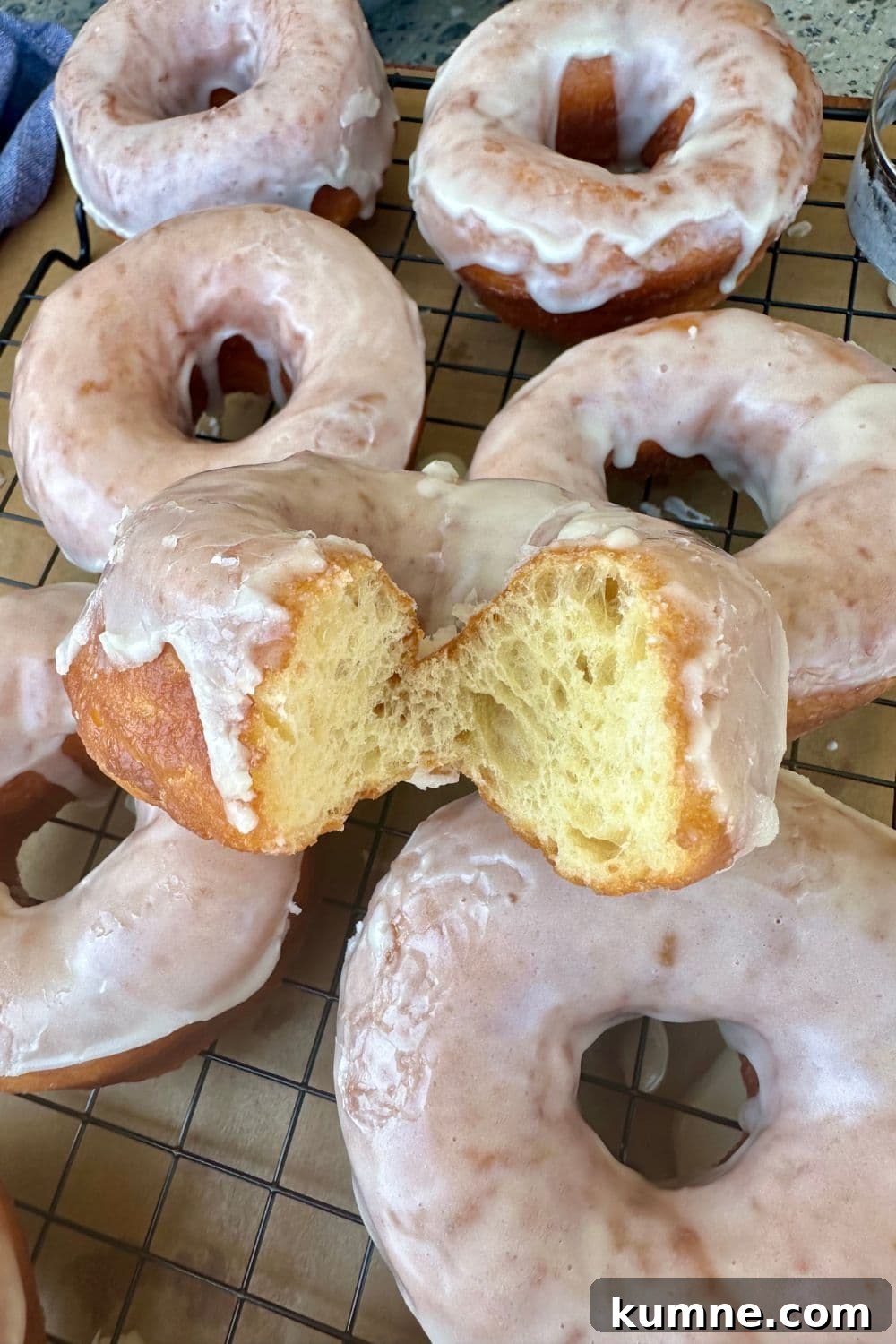
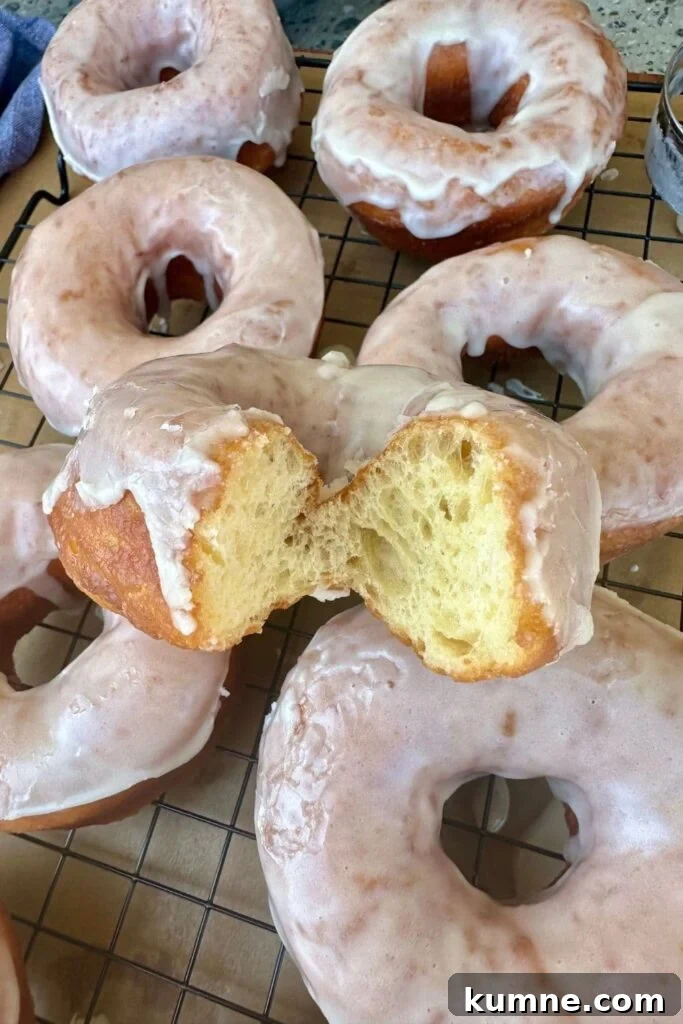
Fried sourdough donuts are a revelation — crisp and golden on the outside with a light, yeasty interior and a subtle tang from the starter. They feel indulgent but are surprisingly straightforward to make. The only fussy step is frying, but once you get comfortable with the temperature and batches, it becomes quick and satisfying. If you prefer not to fry, try baked sourdough donuts for a lighter alternative.
Why You’ll Love This Recipe
- Naturally leavened – these donuts use an active sourdough starter, giving a pleasant tang that balances the sweet glaze.
- Versatile – finish them with cinnamon sugar, a vanilla glaze, chocolate, or fill them with jam or custard. Many serving ideas are included below.
Bulk Fermentation & Proofing Time
This is an enriched dough containing egg yolks, buttermilk and butter, so bulk fermentation and proofing take longer than leaner doughs. Expect slow bulk fermentation even with an active starter. Keeping the dough warm — around 24–26°C (75–79°F) — speeds things up. I often use a bread proofer or a gently warmed oven set to about 30°C (86°F) for final proofing under a damp towel.
After cutting, the donuts need time to puff up. Don’t rush this step: underproofed donuts will be dense and gummy. If you need flexibility, the shaped donuts can be chilled to slow proofing; bring them back to room temperature and let them become puffy before frying.

How to Make Fried Sourdough Donuts with Vanilla Glaze
The recipe can be mixed using a stand mixer, a Thermomix, or by hand. Choose the method that suits you.
How to Mix & Knead Using a Stand Mixer
Add sourdough starter, warmed buttermilk, egg yolks and sugar to the mixer bowl and combine on low with the paddle attachment. Swap to the dough hook and add the bread flour, butter and salt. Knead until a soft, elastic dough forms. The dough should be tacky but not sticky and shouldn’t adhere to your fingers when properly kneaded.
How to Mix & Knead Using a Thermomix
Place all ingredients in the Thermomix bowl and use the knead function for 4–5 minutes until soft and elastic. It should feel tacky but not sticky.
How to Mix & Knead by Hand
Whisk together starter, buttermilk, egg yolks and sugar until foamy. Stir in the bread flour and salt to form a shaggy dough, then turn it out and knead 1–2 minutes until smoother. Rest 5 minutes and add softened butter in small amounts, kneading until fully incorporated and the dough becomes soft and elastic. It will be tacky but should not stick to your fingers when adequately kneaded.
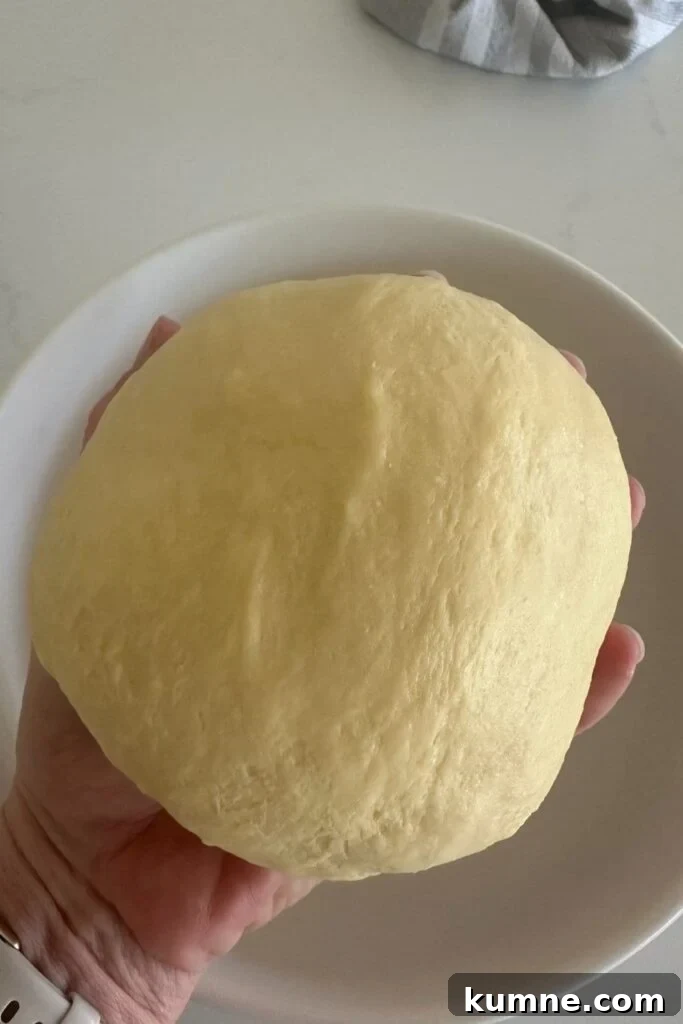
Bulk Fermentation
Place the kneaded dough in a covered bowl and bulk ferment at room temperature until it has increased by about 50% in volume. Times vary by starter activity and room temperature.
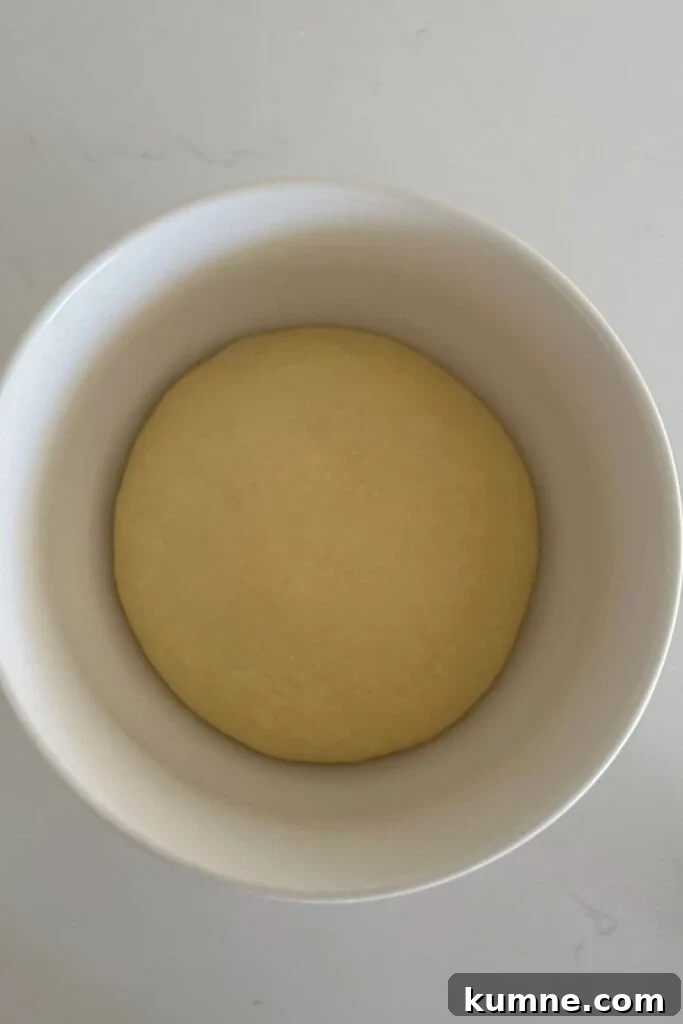
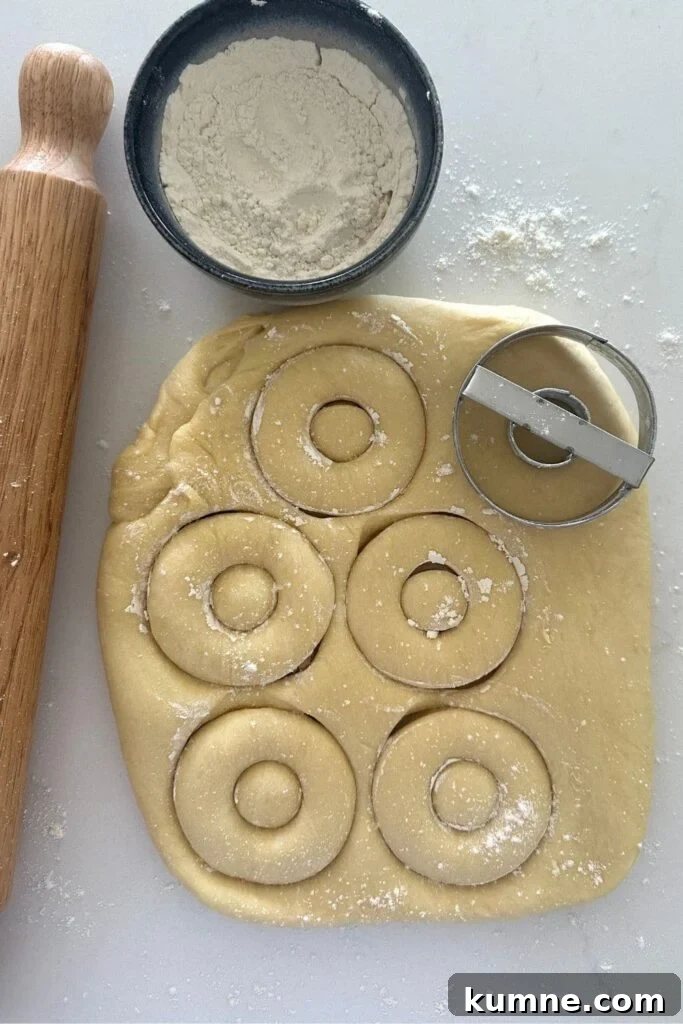
Cutting Sourdough Donuts for Frying
Turn the risen dough onto a floured surface and roll to roughly 25 x 25 cm (10″ x 10″). Use a donut cutter dipped in flour to cut shapes. If you don’t have one, a wide jar, glass or biscuit cutter works well. For filled donuts, a biscuit cutter without a hole is best. Re-roll scraps; I usually fold donut holes back into the dough when re-rolling.
Place cut donuts on a parchment-lined tray and cover with a damp cloth to proof until puffy.
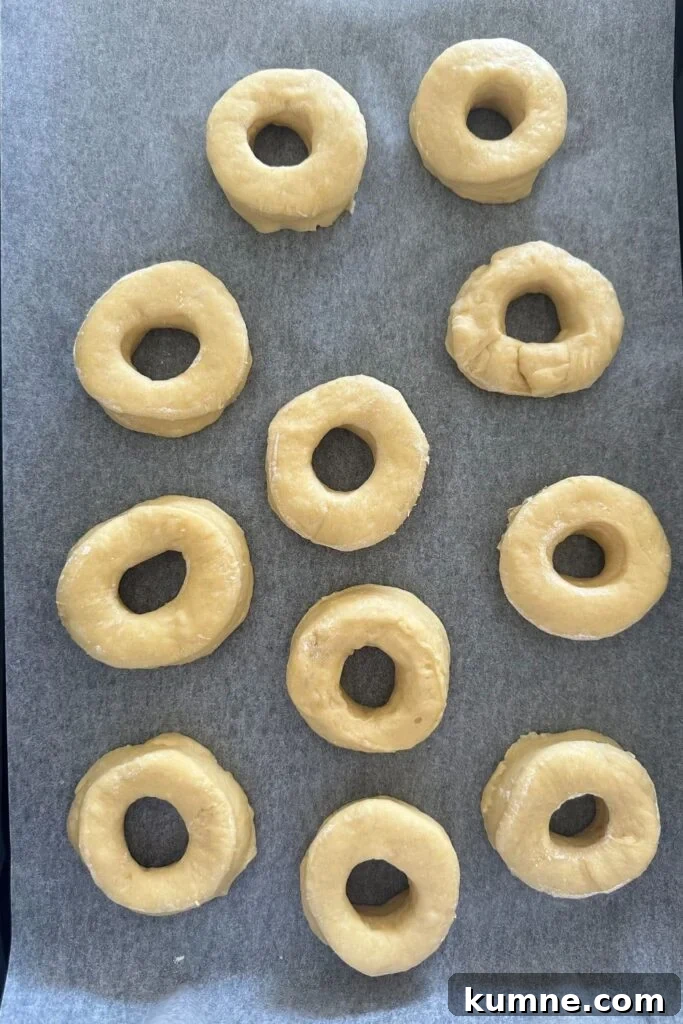
Frying Sourdough Donuts
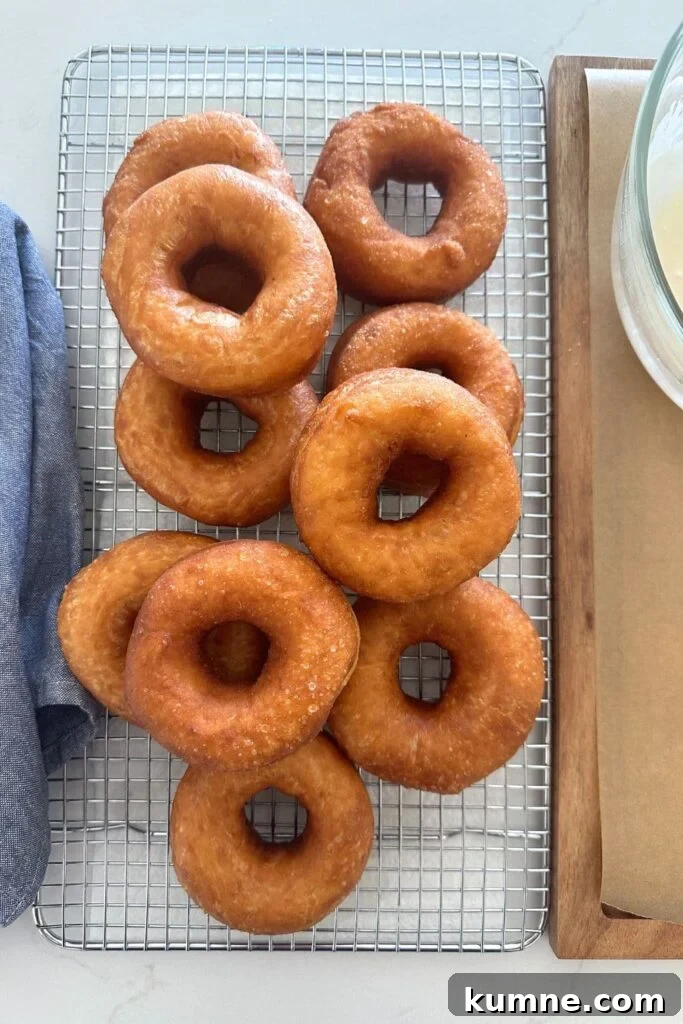
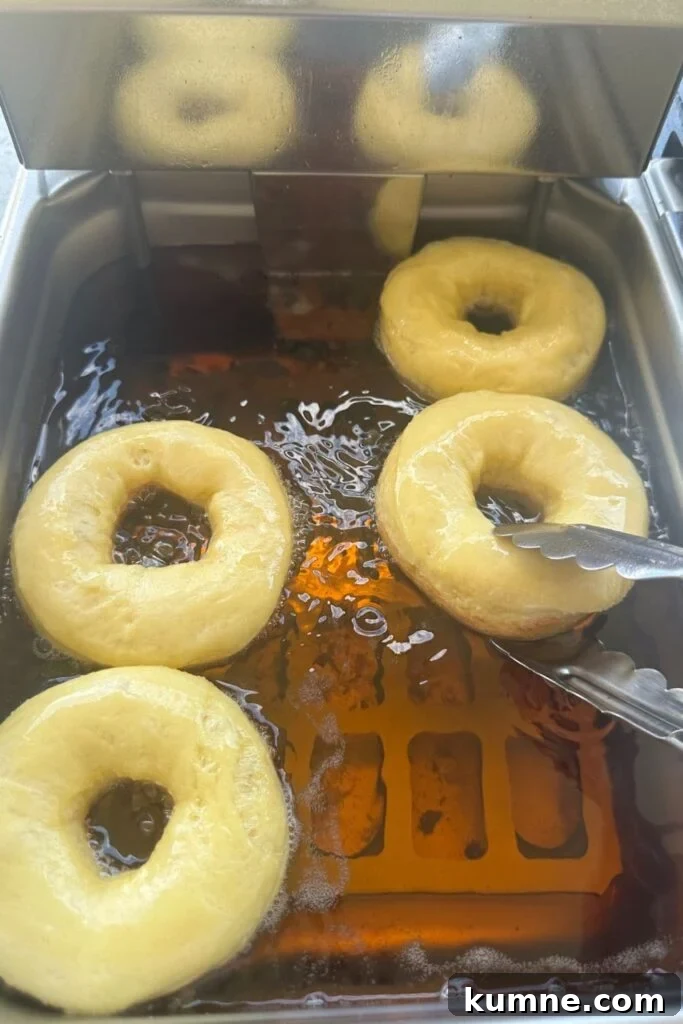
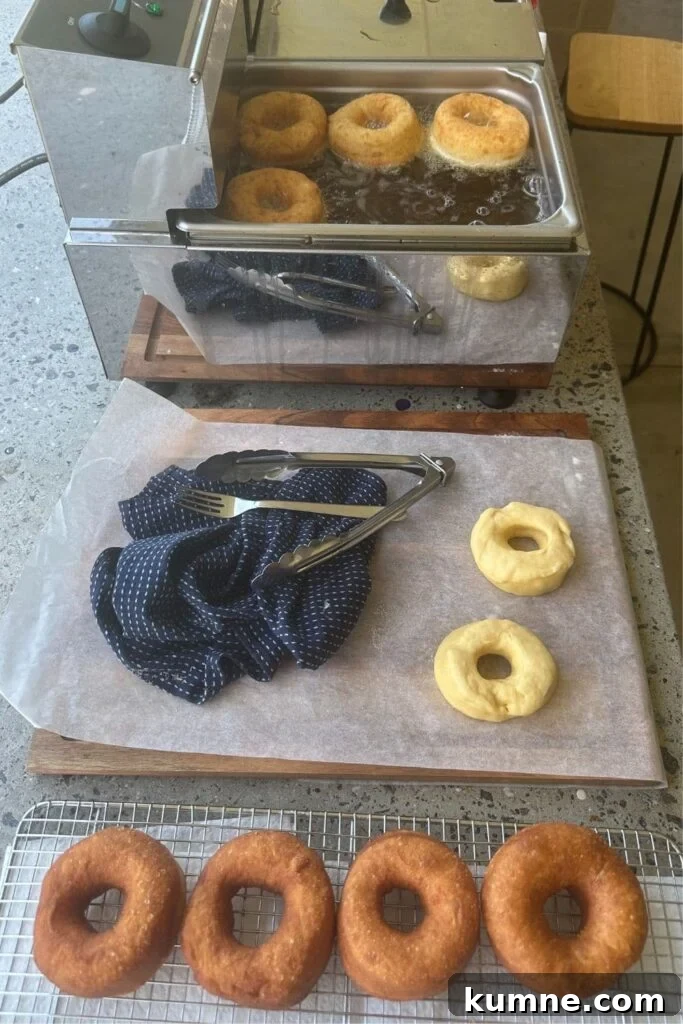
Heat oil to 180°C (350°F). Use a deep fryer, Dutch oven or heavy skillet with enough oil to submerge the donuts. Fry in batches (3–4 donuts) for about 2 minutes per side until golden. Drain on paper towel. If coating with cinnamon sugar, toss them immediately after frying while still hot.
Making the Vanilla Glaze
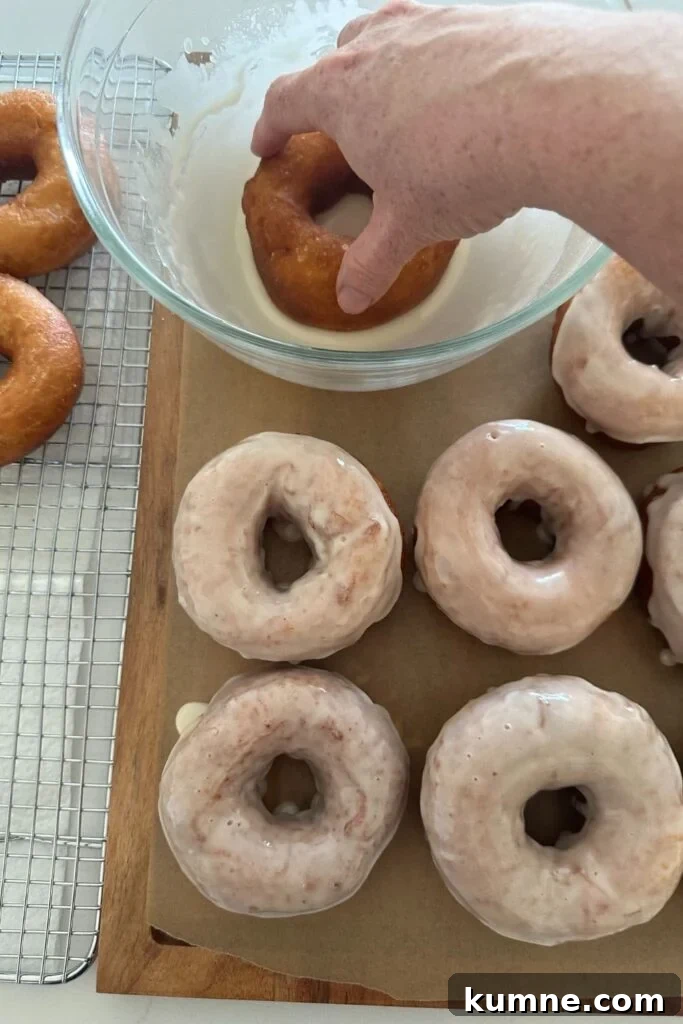
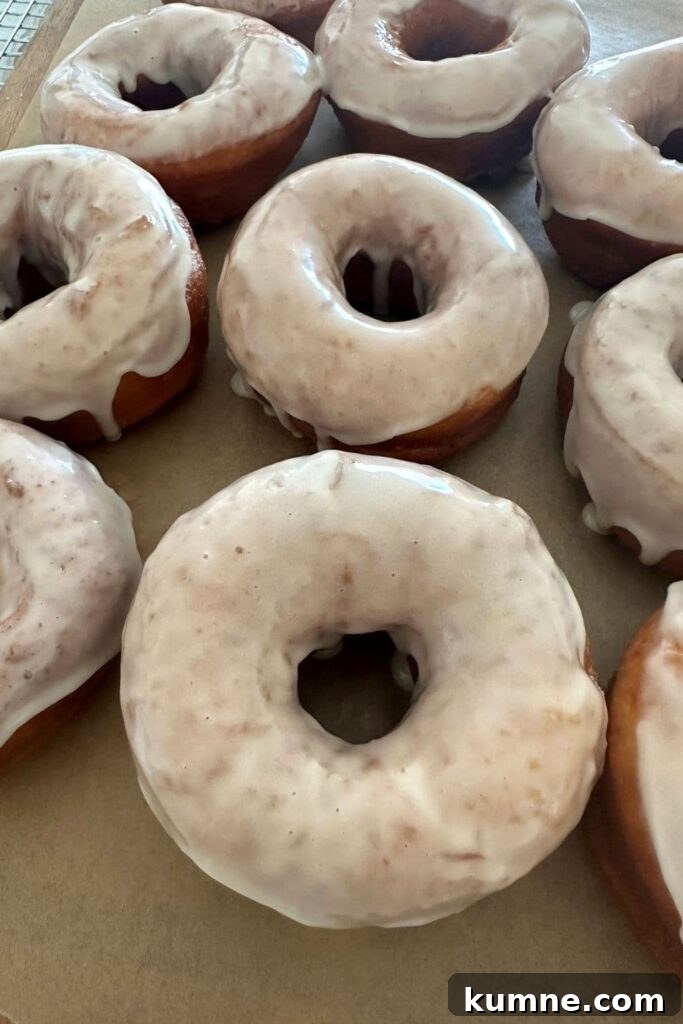
Whisk the powdered sugar, milk and vanilla extract until smooth. Once the donuts have cooled slightly, dip each into the glaze and place on a wire rack to set.
Best Tips for Success
Buttermilk substitute – if you don’t have buttermilk, combine 180 g milk with a splash of vinegar and let sit 5 minutes to thicken.
Donut cutter alternatives – use a biscuit cutter, mason jar, or glass. A bottle cap or small lid works for the center hole.
Donut holes – either fry them or re-incorporate into the dough for more full donuts.
Oil choice – neutral oils with a high smoke point work best (rice bran, vegetable, canola). Coconut oil is also an option. Maintain 180°C for even cooking without greasiness.
Baker’s Timeline (Example)
Timing will vary by starter and ambient temperature. This example shows one possible schedule.
The night before
9:00 pm — Feed the starter so it peaks in the morning.
The next day
7:00 am — Mix the dough and begin bulk fermentation until it rises ~50%.
1:00 pm — Cut donuts and place on a parchment-lined sheet to proof under a damp towel.
5:00 pm — Fry and glaze the donuts.
Shaping and refrigeration can be used to shift the timeline; chilled shaped donuts should return to room temperature and proof fully before frying.
Flavor Variations
Besides vanilla glaze or cinnamon sugar, try these ideas:
- Fill round donuts with Nutella, raspberry jam or pastry cream after frying.
- Top with chocolate or strawberry glaze and sprinkles.
Simple glazes:
- Strawberry glaze – 250 g powdered sugar, pinch of salt, 60 g milk and 1 tbsp strawberry jam (optional pink coloring).
- Chocolate glaze – 250 g powdered sugar, pinch of salt, 60 g milk and 1 tbsp cocoa powder.
Sourdough Discard Version
Yes. Substitute 100 g sourdough discard for the fed starter and add 7 g instant yeast to the dough. Rising times will be shorter with yeast added.

Fried Sourdough Donuts with Vanilla Glaze
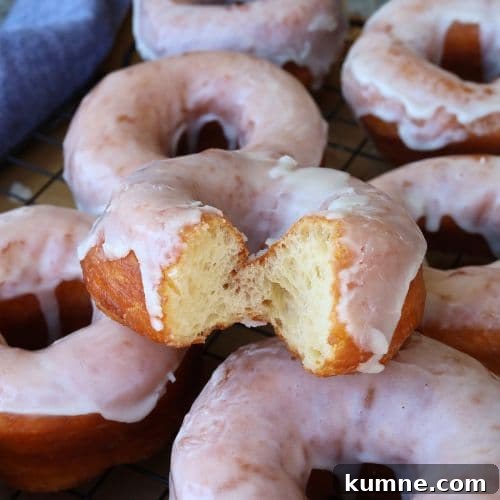
Indulge in golden fried sourdough donuts with a soft, airy crumb and a sweet vanilla glaze. These donuts pair the tang of natural starter with rich, enriched dough for a memorable treat.
Equipment
- Deep fryer or Dutch oven for frying
- Donut cutter (or alternatives: biscuit cutter, wide jar)
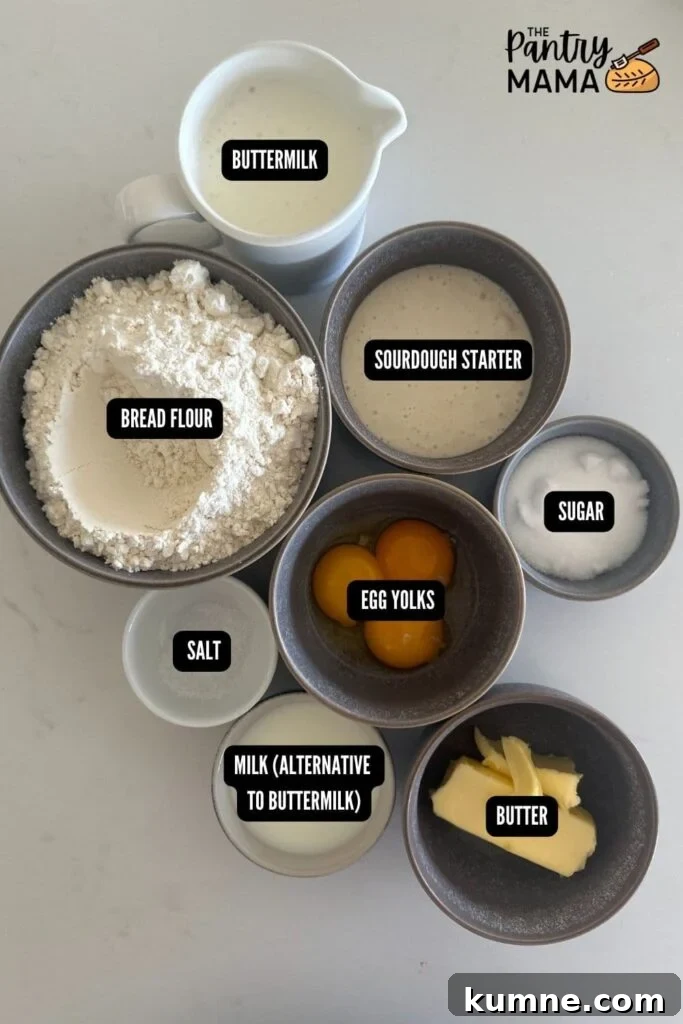
Ingredients
Sourdough Donuts (makes ~10)
- 100 g sourdough starter
- 180 g buttermilk (see notes for milk substitute)
- 3 egg yolks
- 40 g sugar
- 400 g bread flour
- 60 g butter
- 5 g salt
Vanilla Glaze
- 125 g powdered sugar
- 30 g milk
- 5 g vanilla extract
Instructions (Summary)
- Mix and knead by stand mixer, Thermomix or by hand until the dough is soft, elastic and tacky but not sticky.
- Bulk ferment covered until the dough has risen about 50%.
- Roll to roughly 25 x 25 cm and cut donuts. Place on parchment-lined tray and cover to proof until puffy.
- Heat oil to 180°C (350°F). Fry donuts in batches 2 minutes per side until golden. Drain on paper towel.
- Make the glaze and dip slightly cooled donuts, then allow the glaze to set on a wire rack.
Notes
Buttermilk – If unavailable, use 180 g milk plus a splash of vinegar and rest 5 minutes.
Bulk fermentation & proofing – Enriched dough is slower to ferment; warm liquids and room-temperature eggs/butter help. Don’t rush proofing.
Donut cutter – A biscuit cutter, jar, or glass can substitute. Use a small lid or bottle cap for the hole if needed.
Oil – Neutral high-smoke-point oils like rice bran, vegetable, or canola are ideal. Maintain 180°C for even color and minimal oil absorption.
Nutrition (per donut, approximate)
Calories: 292 kcal, Carbohydrates: 49 g, Protein: 7 g, Fat: 8 g (derived automatically; use as an estimate).