When cooking brisket, timing and temperature are everything. Undercooked brisket is chewy; overcooked brisket is dry. The real secret is knowing when the meat reaches ideal tenderness. Below I explain how barbecue pros judge doneness, which tests to use, and the best tools to get consistent results.
Brisket generally reaches ideal tenderness between 195°F and 205°F. Going above 210°F risks drying the meat out. For reliable results, many cooks smoke at 225°F and aim for around 203°F, but you can also rely on tenderness tests rather than strictly on numbers.
Meat Thermometers – The Key to Consistent Brisket
A reliable meat thermometer removes guesswork. For low-and-slow barbecue we cook to temperature, not time, so a thermometer you can leave in the meat during the entire cook is invaluable. Cheap instant probes that you repeatedly insert are not ideal because you need continuous monitoring over many hours.
You don’t need to spend a fortune. A durable, accurate leave-in thermometer is the best investment for consistent brisket. It lets you monitor the internal temperature throughout the cook and helps you avoid overcooking.
Smart Thermometers
If you want modern convenience, wireless smart thermometers are excellent. Models that connect to your phone via Bluetooth or Wi‑Fi remove the need to constantly open the smoker. They let you monitor multiple probes remotely and receive alerts when targets are reached, which is useful during long cooks.
Tenderness Tests
Thermometers are essential, but internal temperature is only a guide. When temperatures approach the target range, switch to testing for tenderness. These tactile checks tell you the true doneness of the brisket.
Use your thermometer to get in the ballpark, then rely on feel and simple tests to decide when to pull the meat.
The Toothpick Test
Poke the brisket with a toothpick or an instant‑read probe. At perfect tenderness it should penetrate like a stick of softened butter. If that description is unfamiliar, try poking a stick of butter first to feel the comparison, then test the brisket.
The Jiggle Test
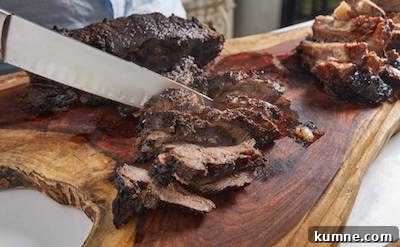
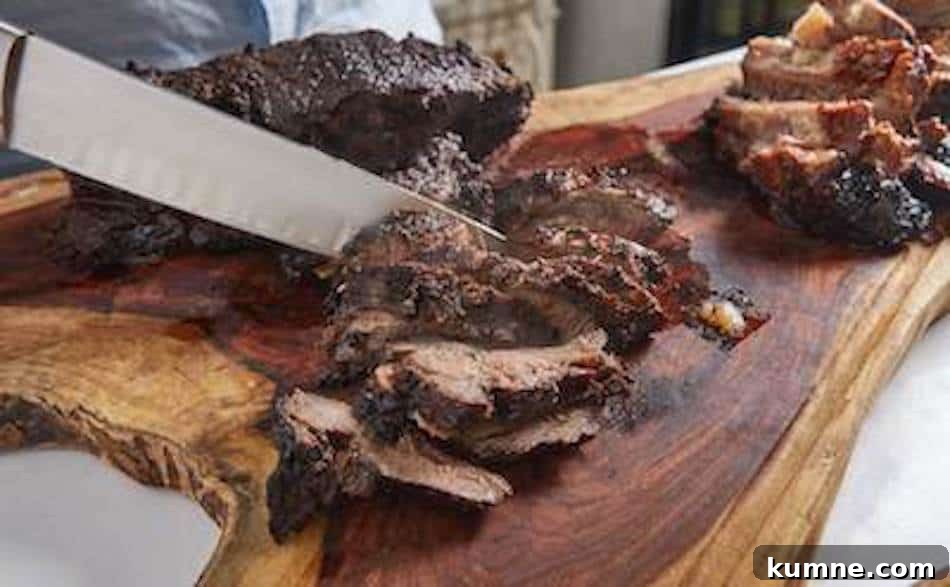
When you slice a piece, you should be able to hold it and give it a small jiggle without the slice falling apart. If the slice collapses or crumbles, it’s over‑tender. If it resists and does not separate easily with gentle hand pressure, it needs more time. Aim for meat that pulls apart with minimal resistance but still holds together.
How Professionals Judge Brisket
Experienced pitmasters often rely more on look and feel than on a single temperature reading. They perform a series of tenderness checks and use thermometers as a guide rather than an absolute rule. Because every brisket varies in size, fat content, and connective tissue, one brisket might be perfect at 198°F while another needs 203°F.
Use thermometers to monitor progress, but train your senses to recognize the visual cues and tactile feedback that signal true tenderness.
No Two Briskets Are the Same
Most briskets become tender between 195°F and 205°F, but individual variability matters. Cooking by time alone often leads to undercooked or overcooked brisket. Rely on temperature ranges plus tactile tenderness tests to make the best call.
What Happens When Brisket Overcooks?
Keeping brisket juicy depends on retaining moisture. As meat cooks, muscle fibers tighten and expel moisture. Prolonged cooking at excessive temperatures continues to draw moisture out, leaving dry meat. That’s why techniques like dry brining, injecting, wrapping, and resting are so important to preserve juiciness.
| Brisket Size | Temperature | Cook Time | Including Resting |
| 12 lbs | 225°F | 18 hours | 19 hours |
| 18 lbs | 250°F | 18 hours | 19 hours |
| 12 lbs unwrapped | 225°F | 19 hours | 20 hours |
| 18 lbs unwrapped | 250°F | 19 hours | 20 hours |
| 16 lbs | 275°F | 10 – 12 hours | 11-13 hours |
| 16 lbs unwrapped | 275°F | 11-13 hours | 12-14 hours |
Salt Helps Brisket Retain Moisture
Salt enhances flavor and helps meat retain moisture. Dry brining—rubbing kosher or sea salt into the brisket and letting it sit for several hours or overnight—allows the salt to penetrate and improve moisture retention. Wet brines are not typically used for brisket; dry brining is simple and effective.
Injecting Adds Moisture and Flavor
Injecting with a flavorful broth or marinade delivers moisture and seasoning deep into the meat. Meat injectors are affordable and easy to use, and they can help you produce juicier, more flavorful results, especially for competition-style brisket.
Wrapping Helps Retain Moisture
Wrapping the brisket in foil or unwaxed butcher paper during the second half of the cook helps it retain moisture and speeds the finish. Many cooks wrap once the bark has set to push through the stall and protect the meat while still developing a good crust.
Resting Prevents Dryness
Resting allows the muscle fibers to relax and reabsorb juices. If you slice brisket immediately after cooking, it will lose a lot of moisture and taste dry. Rest the brisket for about an hour before slicing; if you need to hold it longer, keep it wrapped and insulated in a dry cooler to maintain temperature for several hours.
Marbling Keeps Brisket Juicy
Choose a brisket with good marbling for the best chance at a juicy result. Marbling—the intramuscular fat—melts during cooking and bastes the meat from the inside. USDA Choice, Prime, and wagyu-grade beef have higher marbling than Select or Standard, and are less likely to dry out.
| Beef Grade | Marbling Level |
| Wagyu | Abundant |
| Prime | High |
| Choice | Moderate |
| Select | Small |
| Standard Commercial | None |
Smoked Brisket
Tender, juicy smoked brisket cooked low and slow on a smoker.
Ingredients
- Brisket
- Barbecue rub
- Kosher salt (for the dry brine)
- Yellow mustard or olive oil (for the binder)
Instructions
- Select a brisket with good marbling.
- Trim the fat but leave about 1/4 inch on top.
- Dry brine by sprinkling kosher salt on both sides and refrigerate for a few hours or overnight.
- Optional: inject with broth or marinade for added moisture and flavor.
- Optional: coat with olive oil or yellow mustard as a binder.
- Apply an even layer of barbecue rub. If your rub contains salt, skip the dry brine.
- Use hickory, oak, pecan, or your preferred smoking wood.
- Set your smoker between 225°F and 250°F.
- Place the brisket in the smoker away from the direct heat source.
- Fill the water pan with hot water to help regulate temperature and humidity.
- Insert a leave-in meat thermometer into the thickest part of the brisket.
- Allow the brisket to smoke undisturbed for the first few hours to develop bark.
- When the bark has set, spritz every hour with apple juice, broth, apple cider vinegar, or beer, or mop as preferred.
- Once the bark is firm, wrap the brisket in foil or butcher paper. At this point the internal temperature is often between 150°F and 160°F.
- Return the wrapped brisket to the smoker and continue cooking until it passes tenderness tests. Ideal internal doneness is typically between 195°F and 203°F when perfectly tender.
- Rest the brisket for about one hour before slicing. To hold longer, keep it wrapped and insulated in a dry cooler; it can stay hot for several hours.
- Slice against the grain and serve.
Nutrition Information:
Serving Size:
85 grams
Amount Per Serving:
Calories: 246 grams
My Favorite Brisket Tools
Below are tools I commonly use when smoking brisket. These recommendations reflect what I use and suggest to friends; choose what fits your needs and budget.
Meat Injector: Injecting adds flavor and moisture deep into the meat. A sturdy stainless steel injector is affordable and useful for competition-style results.
Brisket Marinade: A quality injection solution enhances flavor and helps retain moisture. Competition pitmasters often use specially formulated injections.
Butcher Paper: Use unwaxed, food-grade butcher paper to wrap brisket for a strong bark and good moisture retention.
Brisket Rub: Make your own rub or keep a few trusted commercial blends on hand for convenience.
Meat Thermometer: A two-probe leave-in thermometer is extremely helpful for monitoring both smoker and meat temperatures during a long cook.
Instant-Read Thermometer: A fast, accurate instant‑read probe is essential for spot-checking temperature and performing tenderness tests in multiple areas.
Advanced Thermometer and Controller: For serious cooks, multi-channel Bluetooth/Wi‑Fi thermometers and automatic temperature controllers provide precise monitoring and can convert a charcoal smoker into a reliable set‑and‑forget system.
Thanks for reading. Use a good thermometer, learn the tenderness tests, and practice—each brisket teaches you more about feel, temperature, and timing. Happy smoking.