
This easy Serbian baked sauerkraut (podvarak) is simple, nourishing comfort food made from a few wholesome ingredients.
Common throughout the Balkans, this version begins by sautéing sauerkraut with onions and bacon, then baking it with smoked meat until the edges turn golden and slightly caramelized.

Looking for a warm, satisfying meal to lift cold-weather spirits? Hearty baked sauerkraut delivers cozy flavors and filling portions ideal for chilly days.
📃 Why it Works
- Budget-friendly. Podvarak feeds a crowd without costing much.
- Freezes well. Make a batch and store portions for busy nights.
- Simple to prepare. A few basic ingredients and straightforward steps.
- Nutritious. Fermented foods like sauerkraut support gut health—just remember that not all fermented products are the same.
🛒 Ingredients and Notes
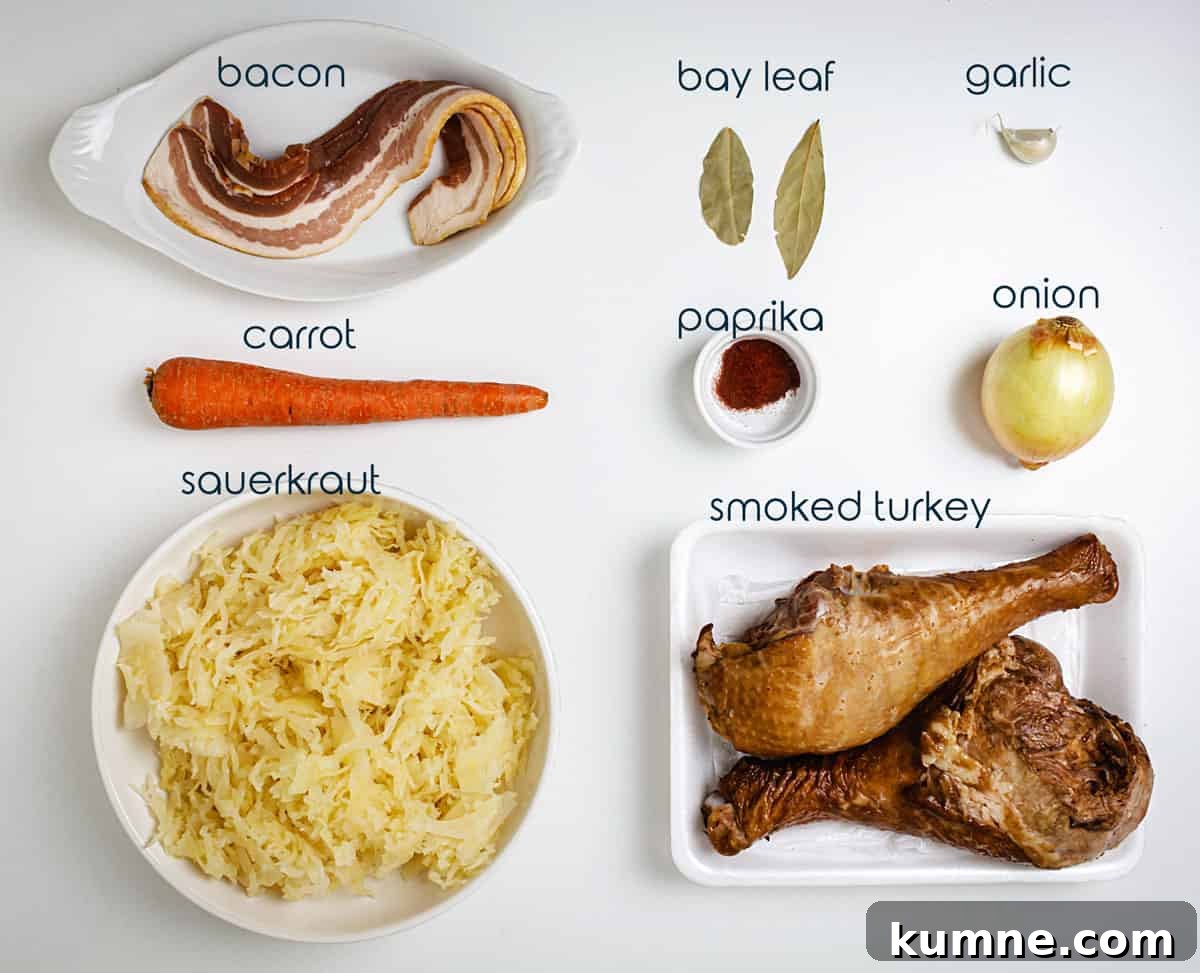
- Sauerkraut: Use canned, jarred, or bagged sauerkraut. You can also make your own (see the homemade sauerkraut section below).
- Meat: Traditionally smoked turkey or pork (ham). You can substitute smoked sausage, kielbasa, roasted pork, or chicken.
🔪 Instructions
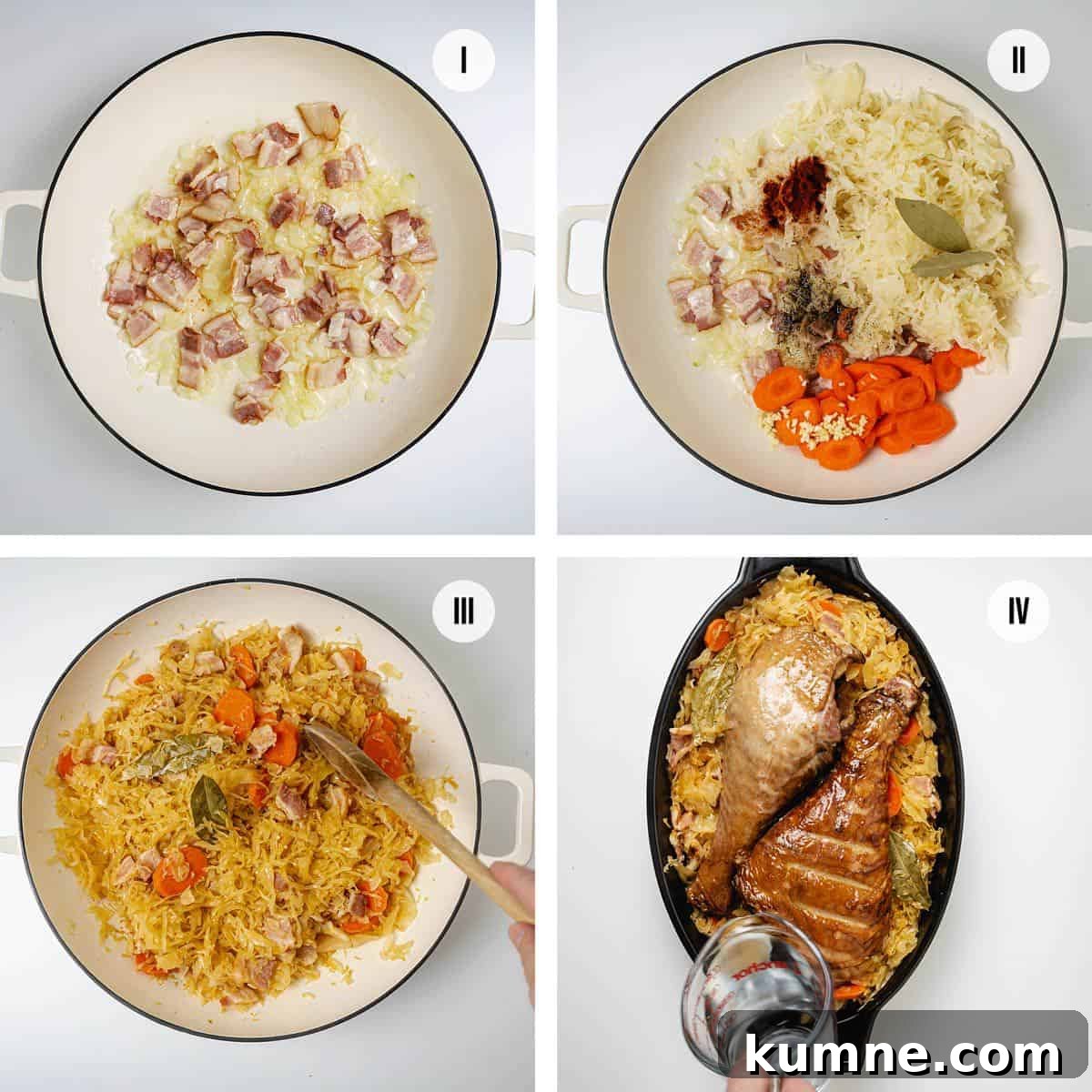
- In a large skillet over medium heat, sauté onions and bacon in lard or oil until the onions are golden, about 5 minutes.
- Add garlic, sliced carrots, sauerkraut, bay leaves, black pepper, and paprika; stir to combine.
- Continue to brown the mixture, stirring occasionally, for another 5–10 minutes to develop flavor.
- Transfer the sauerkraut mixture to a baking dish. Arrange smoked turkey legs or the meat of your choice on top. Add about ½ cup of water, cover with a lid or aluminum foil, and bake at 375°F (190°C) for 45 minutes. Uncover and bake another 15 minutes to let the top caramelize. Remove and discard bay leaves before serving.
Fermenting cabbage has long been a winter tradition in many European households. Whole heads and shredded cabbage were preserved to provide nourishing food through cold months.
Growing up, many families saved leaves for stuffed cabbage rolls and used shredded fermented cabbage in soups, casseroles, and dishes like podvarak.
How do I make homemade sauerkraut?
Homemade sauerkraut is easy to prepare in mason jars and requires just cabbage, salt, and time.
You will need:
- 1 head green cabbage, thinly shredded
- 1 tablespoon sea salt per head of cabbage
- Clean glass jar (one head of cabbage fits in a quart-sized mason jar)
- Extra brine if needed: 1 tablespoon sea salt + 4 cups non-chlorinated water
Method:
- In a large bowl, massage the salt into the shredded cabbage for 5–10 minutes until the cabbage softens and releases liquid.
- Pack handfuls of the cabbage tightly into a clean jar, adding any liquid released while massaging.
- Ensure the cabbage is submerged under brine, leaving about 1 inch of headspace. If cabbage floats, weigh it down with a glass weight or a whole outer leaf.
- Cover the jar mouth with a cloth secured by a rubber band to keep debris out while allowing gases to escape.
- Store at room temperature, away from direct sunlight, for at least one week. If after 24 hours liquid hasn’t covered the cabbage, add extra brine.
- Check daily and press the cabbage down if it rises above the liquid. Bubbles and foam or white scum are normal—skim the scum if desired.
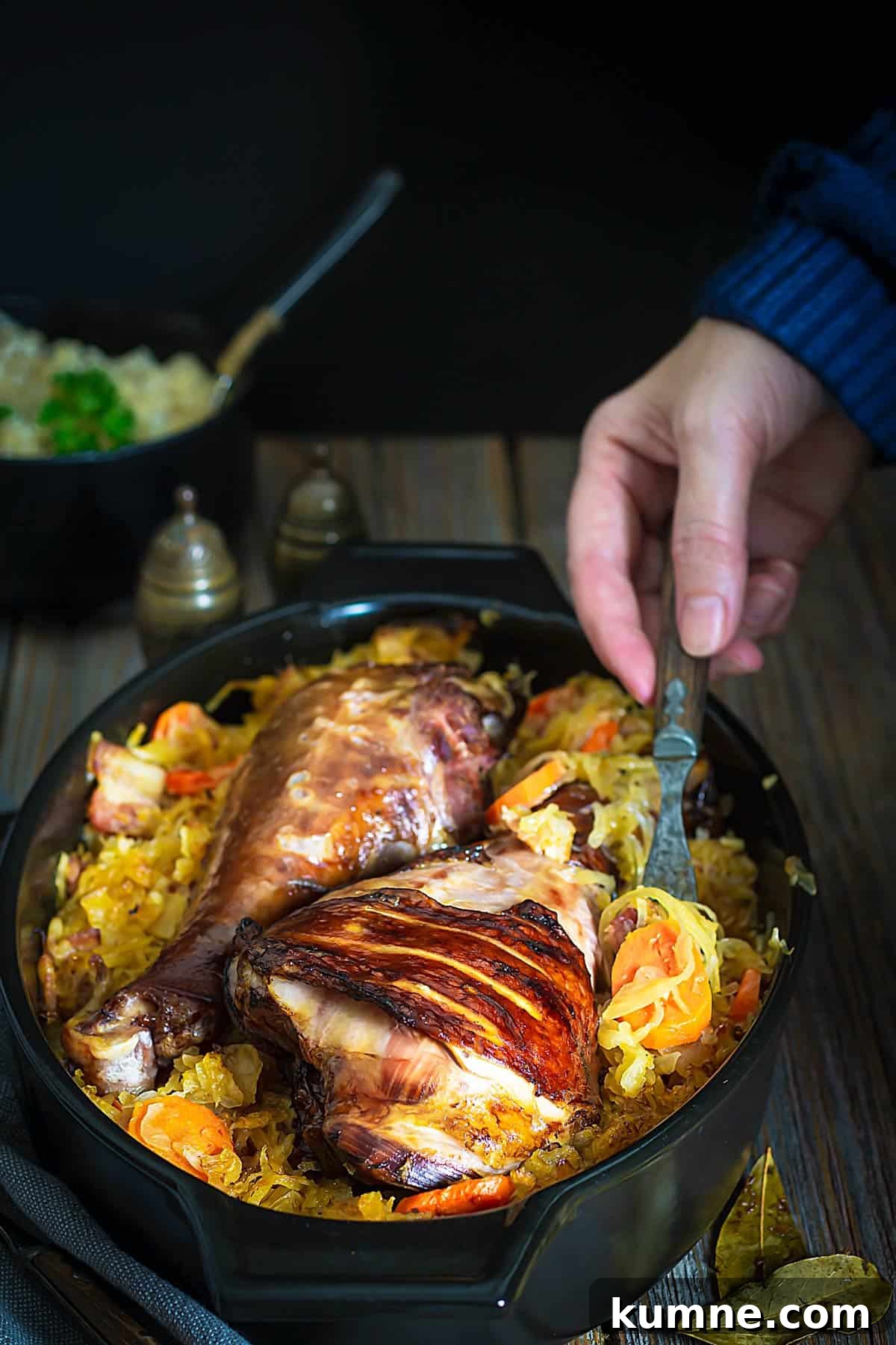
- Tips: For best flavor, bake in a clay pot or roasting pan. Smoked paprika can be used instead of sweet paprika. Substitute smoked turkey with ham or smoked sausage as desired.
- Serving suggestions: Serve with mashed potatoes, rice, or noodles.
- Salt: Taste sauerkraut before adding salt; rinse first if the brine is too strong.
- Storage: Refrigerate covered leftovers for up to 5 days or freeze portions for longer storage.
🍽 How To Serve It
Traditionally paired with caramelized onion mashed potatoes, podvarak also complements warm potato salad, plain mashed potatoes, rice, or egg noodles.
❓ Frequently Asked Questions
Both. Baked sauerkraut is served hot with meat dishes, while cold sauerkraut works well as a topping for hot dogs and Reuben sandwiches.
Keep it in an airtight container in the refrigerator for up to 5 days, or freeze for up to 3 months.
Taste it first. If the brine is very salty, rinsing and draining will give a milder result.
Turn it into a quick side salad by adding freshly ground black pepper and a tablespoon of oil, or use it in soups, stews, and casseroles.
If you enjoy this baked sauerkraut, try other Serbian dishes and traditional recipes that pair well with it.

Enjoyed this recipe? Leave a rating or review to share your experience. Your feedback helps others find and prepare comforting, homemade meals.

Serbian Baked Sauerkraut – Podvarak
Pin Recipe
Print Recipe
EQUIPMENT
-
Colander
-
Large cast-iron or nonstick skillet
-
Baking dish or roasting pan
Ingredients
- 2 tablespoon pork lard or oil
- 5 ounces bacon, cut into ½-inch pieces
- 1 large yellow onion, chopped
- 1 garlic clove, minced
- 1 carrot, sliced
- 1 jar, 32 oz. sauerkraut
- 2-3 bay leaves
- Freshly ground black pepper
- 1 teaspoon sweet paprika
- 1 pound smoked turkey or pork
- ½ cup water
Instructions
-
Preheat oven to 375°F (190°C).
-
Drain sauerkraut in a colander, pressing out excess liquid.
-
Heat lard or oil in a large skillet over medium heat. Add onions and bacon and sauté until the onions are golden, about 5 minutes.
-
Stir in garlic, carrots, sauerkraut, bay leaves, black pepper, and paprika. Brown for 5–10 minutes, stirring occasionally.
-
Transfer the mixture to a baking dish. Place smoked or roasted meat on top, add ½ cup water, cover with a lid or foil, and bake for 45 minutes. Uncover and bake 15 more minutes. Remove bay leaves before serving.
Notes
- For best flavor, bake in a clay pot or roasting pan.
- You may use smoked paprika if you prefer.
- Substitute smoked turkey with ham or smoked sausage.
- Serve with mashed potatoes, rice, or noodles.
- Taste before adding salt; rinse sauerkraut first if it seems too salty.
- Store covered leftovers in the refrigerator for up to 5 days or freeze portions.
- Nutritional information is an estimate and will vary by ingredients and portion size.
Nutrition
| Carbohydrates: 2g
| Protein: 12g
| Fat: 22g
Update Notes: This recipe was originally published in January 2018 and updated in December 2020 with new photos and tips.