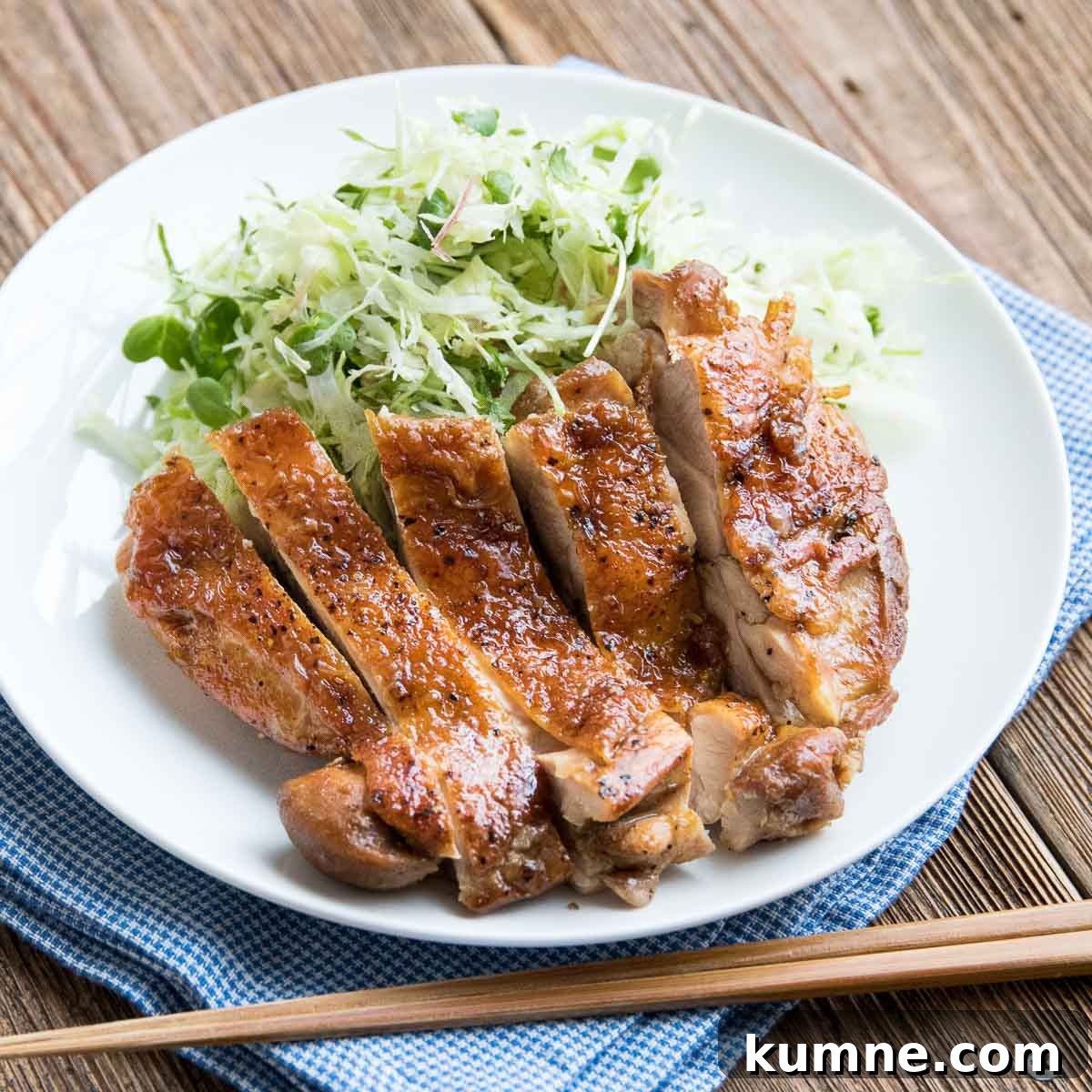
This authentic Teriyaki Chicken recipe is a family favorite. Using the traditional Japanese method, skin-on chicken thighs are pan-seared until golden and crispy, then glazed with a simple four-ingredient teriyaki sauce. Juicy, tender, and full of flavor, it’s ready in about 20 minutes—ideal for a quick, comforting weeknight dinner.
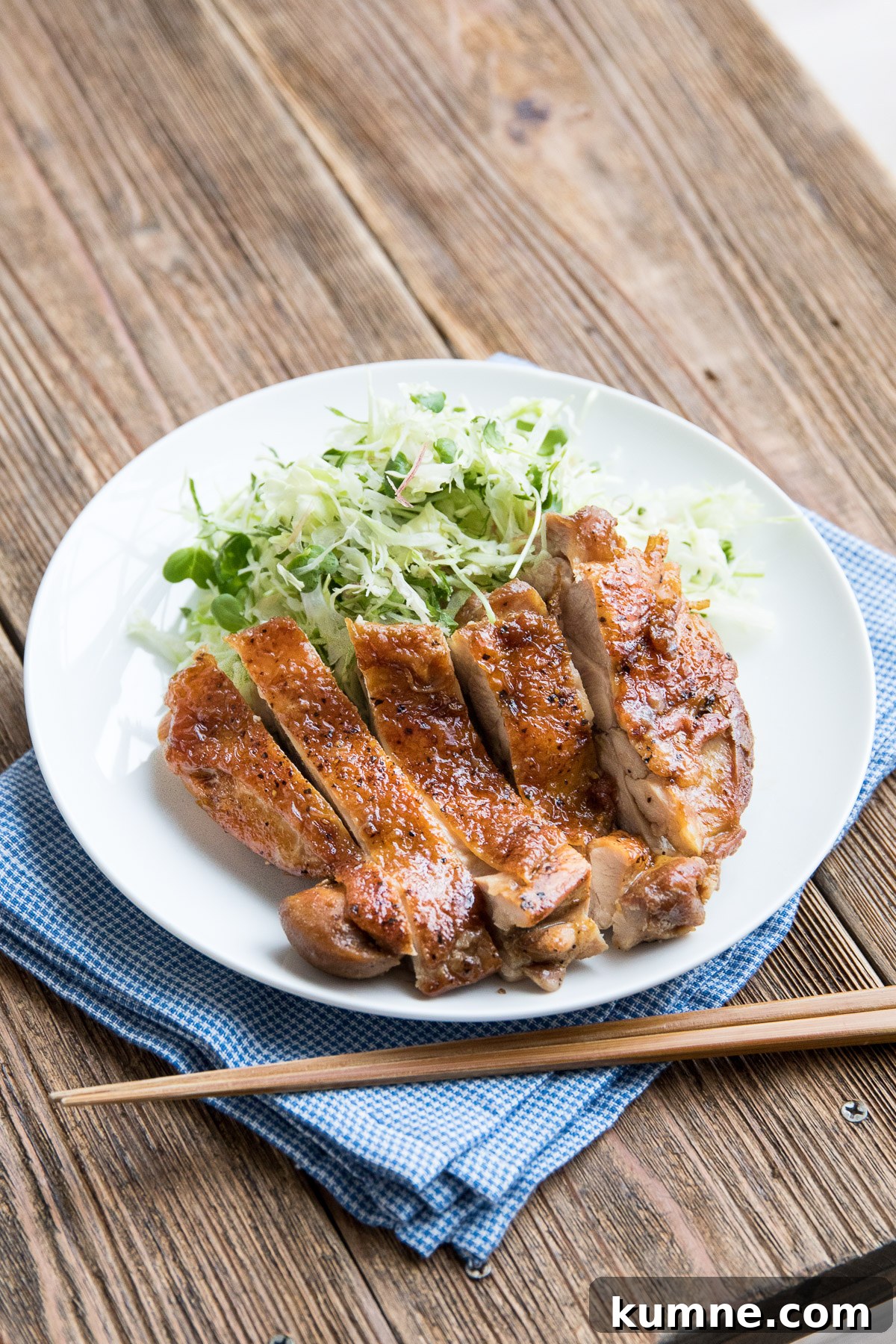
Table of Contents
- What is Teriyaki Chicken?
- Ingredients for Teriyaki Chicken
- What Cut to Use for Teriyaki Chicken
- Skin-on vs. Skinless Chicken Thighs
- Authentic Teriyaki Sauce
- How to Make Teriyaki Chicken
- Classic Glazed vs. Crispy Skin
- Tips for Authentic Teriyaki Chicken
- Serving Suggestions
- How to Store and Reheat Teriyaki
- Recipe FAQ
- Teriyaki Chicken Recipe
Teriyaki was a weekly staple in my childhood—sometimes chicken, sometimes fish. It’s a simple, classic home-cooked meal that appeals to all ages and is quick to prepare. Many modern recipes call for long marinades, baking, or air-frying, but this version follows the traditional Japanese stovetop method: pan-sear skin-on thighs until crisp, then finish with a glossy sauce made from only a few ingredients.
What is Teriyaki Chicken?
Teriyaki Chicken (照り焼きチキン) is a classic Japanese dish where chicken is pan-seared and finished in a simple sauce of soy sauce, sake, mirin, and sugar. The term teriyaki describes the cooking method—teri meaning shine and yaki meaning to grill or pan-cook—referring to the glossy glaze that forms as the sauce reduces. Authentic Japanese teriyaki is typically made on the stovetop and finished just until the glaze clings to the meat, rather than being baked or drowned in bottled sauce.
Ingredients for Teriyaki Chicken
This dish requires only a few pantry staples common in Japanese cooking:
- Chicken thigh: Boneless, skin-on thighs are traditional. You can substitute skinless thighs or breast if preferred.
- Potato starch or cornstarch: Helps retain moisture, crisps the skin, and helps the glaze stick.
- Sugar: Rubbed into the meat to help keep it tender and juicy.
- Teriyaki sauce: A simple combination of soy sauce, mirin, sake, and sugar. Make a batch ahead for quick meals.
What Cut to Use for Teriyaki Chicken
In Japan, teriyaki is commonly made with boneless, skin-on chicken legs (whole leg or thigh). This cut offers more flavor and juiciness than breast. If you can’t find boneless legs, use boneless thighs or debone a bone-in piece yourself. You may use chicken breast if you prefer white meat; leaving the skin on helps retain moisture and improves flavor.
Skin-on vs. Skinless Chicken Thighs
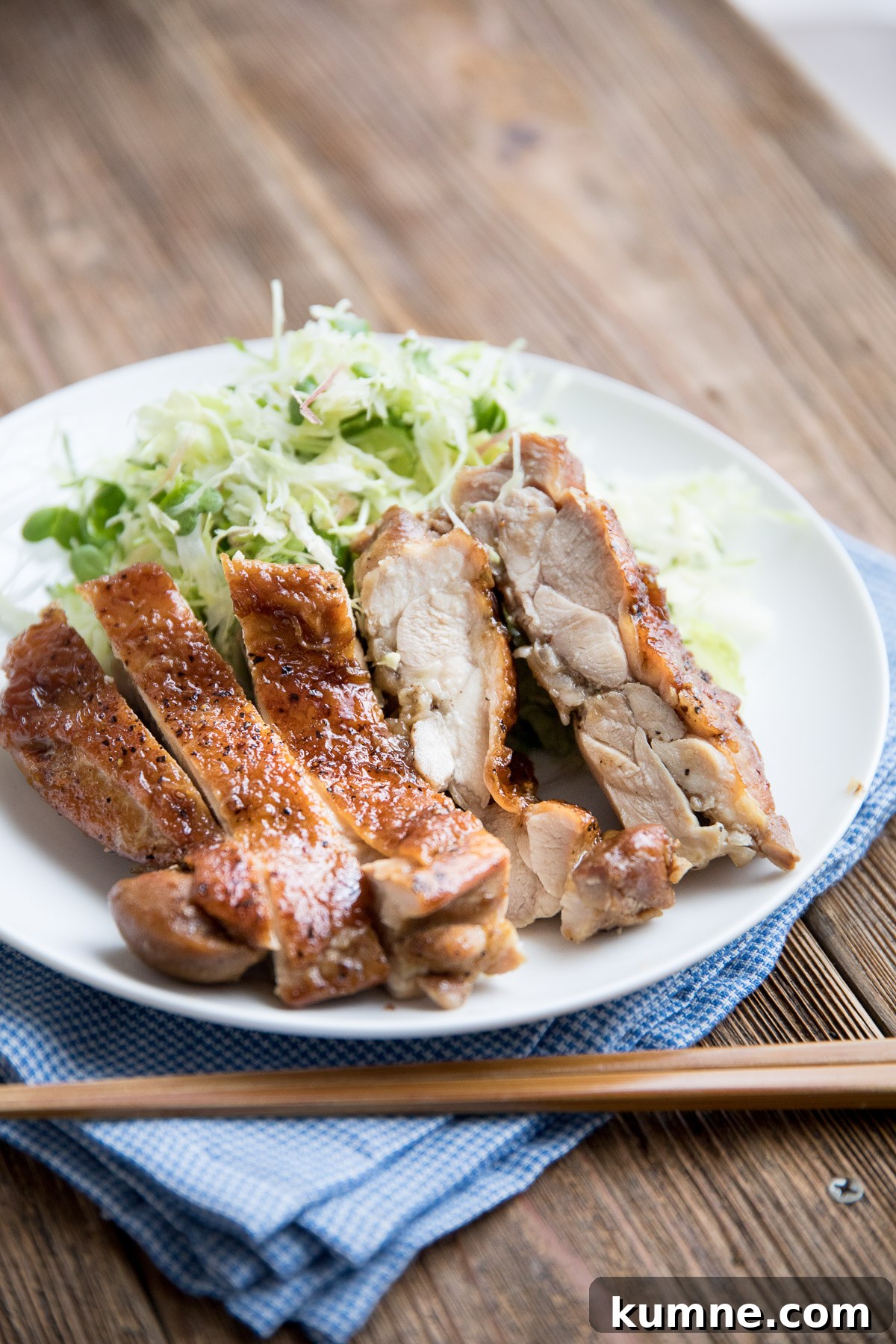
Skin-on boneless thighs are preferred because the rendered fat crisps the skin and adds flavor while helping the glaze adhere. In regions where skin-on thighs are sold bone-in, you can debone them or ask your butcher. The recipe includes notes for cooking skinless thighs so you can still get juicy results without skin.
Authentic Teriyaki Sauce
Traditional Japanese teriyaki sauce uses just four ingredients:
- Soy sauce: Provides saltiness and depth—Japanese brands offer a balanced flavor.
- Mirin: Sweet rice wine that adds delicate sweetness and helps the sauce coat the chicken.
- Sake: Adds umami and tenderizes the meat. Use drinking sake rather than salty cooking sake; the alcohol cooks off as the sauce reduces.
- Sugar: Balances the soy and thickens the sauce into a glossy glaze.
A common ratio is 2:2:2:1 (soy:mirin:sake:sugar), but adjust to taste. If you lack mirin, use 1 tbsp sake plus 1 tsp sugar as a substitute. Dry sherry or Chinese cooking wine can replace sake in a pinch.
How to Make Teriyaki Chicken
Quick overview of the stovetop method:
- Make the sauce: Combine soy sauce, mirin, sake, and sugar until the sugar dissolves. Set aside.
- Prepare the chicken: Pat dry, trim excess fat, and score or slightly flatten thicker areas for even cooking.
- Season: Poke the meat with a fork, rub a little sugar into the surface, then season with salt and pepper. Let rest briefly and pat dry again.
- Coat: Lightly dust the meat side with potato starch (and optionally a very light dust on the skin for extra crispness).
- Sear: In an oiled pan, place chicken skin-side down in a cold pan and heat to medium-high. Press and keep contact until the skin is golden and crisp. Flip and cook the other side until nearly done.
- Finish with sauce: Add the sauce and simmer, swirling the pan to coat the chicken until the glaze clings and becomes glossy.
- Rest and serve: Let the chicken rest a few minutes, slice, and drizzle with remaining sauce.
Classic Glazed vs. Crispy Skin
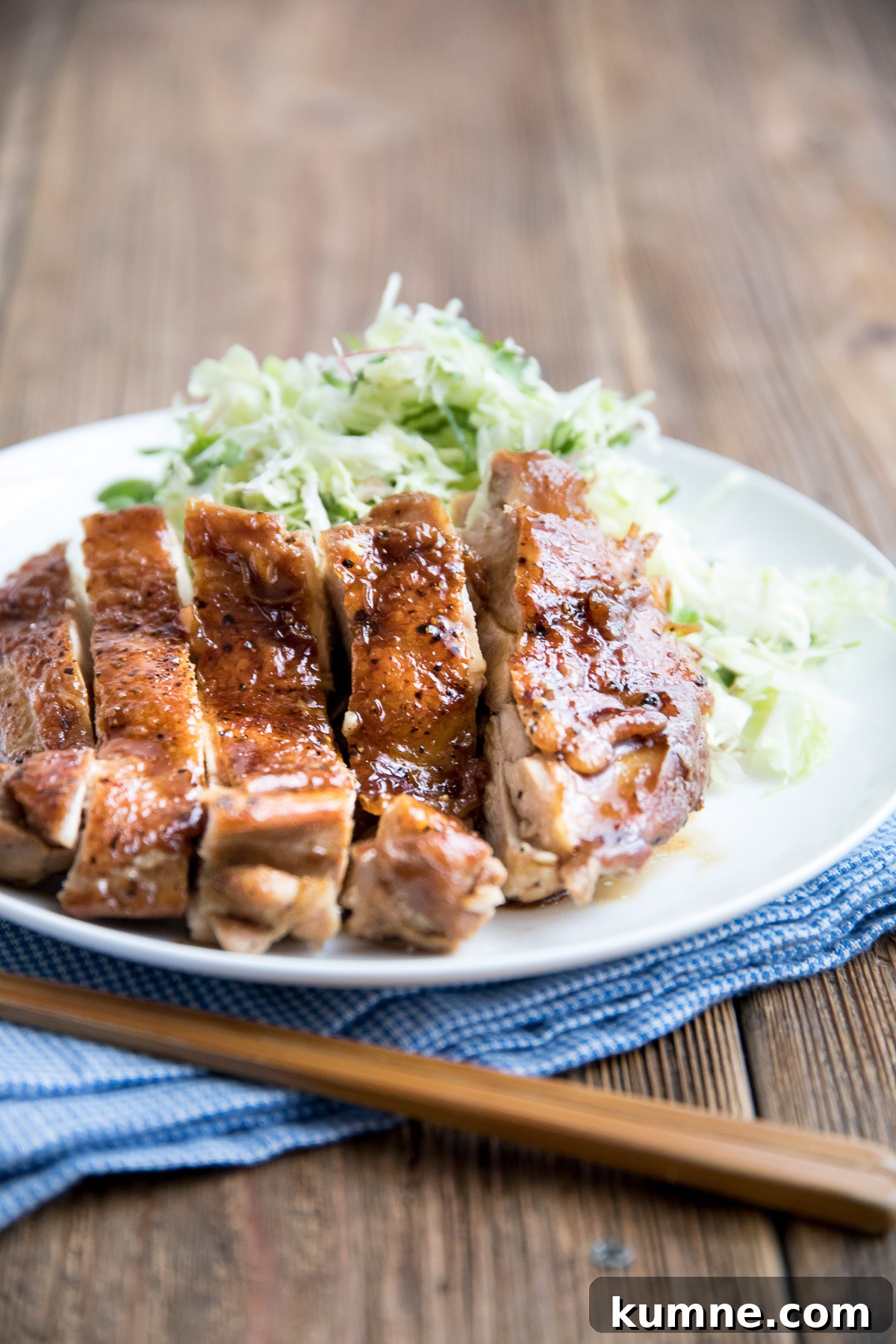
There are two common finishes: a fully glazed version, where the chicken is coated on both sides and the skin becomes rotisserie-like, and a crispy-skin version, where the skin remains crisp and only lightly glazed. The fully glazed style is typical in households and is excellent over rice, while the crispy-skin approach offers contrast between crunchy skin and juicy meat. Both techniques are included in the instructions so you can choose based on your texture preference.
Tips for Authentic Teriyaki Chicken
- Even thickness: Thin or score thick areas so the chicken cooks evenly and stays tender.
- Potato starch: Coat only the meat side (or very lightly the skin) to lock in juices and help the glaze adhere.
- Use enough oil: A well-oiled pan promotes evenly crisp skin; press the chicken to ensure full contact.
- Start cold: Beginning in a cold pan lets fat render slowly and helps the skin crisp without overcooking the meat.
- Remove excess oil: Blot excess oil before adding the sauce to prevent a greasy finish.
- Prep the sauce ahead: Have the sauce ready so you can add it as soon as the chicken is cooked, minimizing drying time.
Serving Suggestions
In Japan, teriyaki chicken is often plated with a few simple sides and rice served separately. In North America it’s common to serve the chicken over rice so the sauce soaks into the grains. Good accompaniments include miso soup, shredded cabbage or a green salad, steamed broccoli or green beans, Japanese potato salad, spinach gomaae, cucumber sunomono, or tamagoyaki. Leftovers work well in onigiri, sandwiches, or bento boxes.
How to Store and Reheat Teriyaki
- Refrigerator: Store unsliced pieces in an airtight container for up to 3 days.
- Reheat: Warm gently in a skillet over low heat with a splash of water to loosen the glaze, or microwave covered on low power until just warmed through.
- Freezer: Freeze cooked chicken for up to 2 months; thaw overnight in the refrigerator before reheating.
Recipe FAQ
Traditional teriyaki sauce includes sake and mirin, which contain alcohol. Most of the alcohol cooks off as the sauce simmers. If you want to avoid alcohol entirely, substitute the sake with water and a small pinch of MSG for umami.
Yes. Follow the skinless instructions: coat the smooth side lightly with cornstarch and heat the pan and oil before adding the chicken so it sears evenly. The chicken will still be juicy though it won’t have crispy skin.
Garlic and ginger aren’t standard in classic Japanese teriyaki but are common in modern variations. Add 1–2 teaspoons grated ginger and/or 1 minced garlic clove to the sauce if you like.
Yes. Air-fry the chicken first, then simmer the sauce separately until thick and brush it onto the cooked chicken so the glaze adheres well.
Enjoy! If you try this Teriyaki Chicken recipe, please leave a comment or rating. Tag @okonomikitchen on Instagram—I’d love to see your photos.
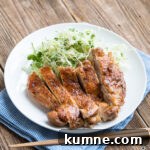
Teriyaki Chicken
5 from 1 review
- Author: Lisa Kitahara
- Total Time: 20 minutes
- Yield: 2 servings
- Diet: Dairy-Free
Description
This authentic Teriyaki Chicken recipe uses the traditional stovetop method: skin-on thighs pan-seared until crisp, then glazed with a simple four-ingredient sauce. Ready in 20 minutes and perfect for weeknights.
Ingredients
For the Chicken
- 1 whole skin-on boneless chicken leg or 2 skin-on boneless chicken thighs (about 300–350 g)
- 1/2 tsp sugar
- 1/4 tsp salt
- 1/4 tsp black pepper
- 1 tbsp neutral oil
- 1/2 tbsp potato starch (or cornstarch)
For the Teriyaki Sauce (2:2:2:1)
- 1.5 tbsp soy sauce
- 1.5 tbsp mirin
- 1.5 tbsp sake
- 2 tsp sugar (or use prepared teriyaki sauce)
Instructions
- Prepare the sauce: Mix soy sauce, mirin, sake, and sugar until the sugar dissolves.
- Prepare the chicken: Pat the chicken dry, trim excess fat and tendons, and score or thin the thickest parts so the piece cooks evenly.
- Season: Poke the chicken with a fork to help seasoning penetrate. Rub sugar into the meat, season with salt and pepper, let sit 5 minutes, then pat dry again.
- Coat: Lightly dust the meat side with potato starch. If you want extra-crispy skin, you can very lightly dust the skin and brush off excess; otherwise leave the skin uncoated.
- Sear the skin: Add oil to a pan and set over medium-high heat. Place the chicken skin-side down in a cold pan, press to ensure full contact, and sear until the skin is deep golden and crisp (about 5 minutes), turning occasionally to brown evenly.
- Cook the other side: Lower the heat, flip the chicken, and cook 2–3 minutes until nearly done. Blot excess oil from the pan with a paper towel.
- Add the sauce: Pour the teriyaki sauce into the pan and bring to a simmer. Swirl the chicken to coat and let the sauce reduce to a glossy glaze. For a fully glazed finish, flip the chicken to coat both sides; for maximum crispness, avoid heavy basting and simply swirl the pan so the meat side absorbs most sauce, then spoon a little glaze over the sliced chicken.
- Rest and serve: Let the chicken rest 3 minutes, slice skin-side down for clean cuts, plate, and drizzle with extra sauce. Enjoy.
Notes
If using skinless boneless thighs, coat the smooth side lightly with cornstarch and heat the oil and pan before adding the chicken smooth side down. Proceed with the recipe the same way for juicy results without crispy skin.
- Prep Time: 10 minutes
- Cook Time: 10 minutes
- Category: Main dish
- Method: Stovetop
- Cuisine: Japanese
Nutrition
- Serving Size: 1 serving
- Calories: 450
- Sugar: 8 g
- Sodium: 850 mg
- Fat: 31 g
- Saturated Fat: 8 g
- Unsaturated Fat: 23 g
- Trans Fat: 0.1 g
- Carbohydrates: 10 g
- Fiber: 0 g
- Protein: 30 g
- Cholesterol: 130 mg
Photography by Uchikoshi Yusuke.